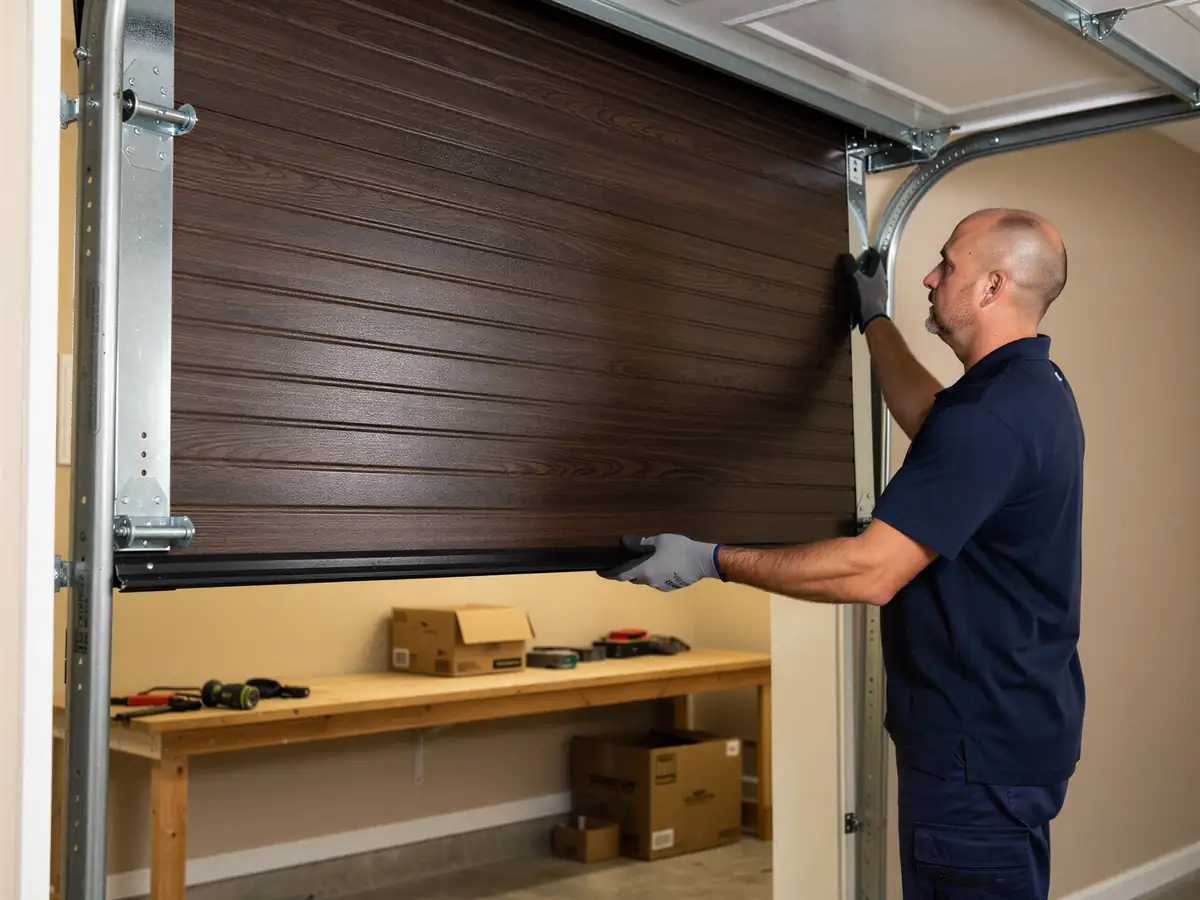
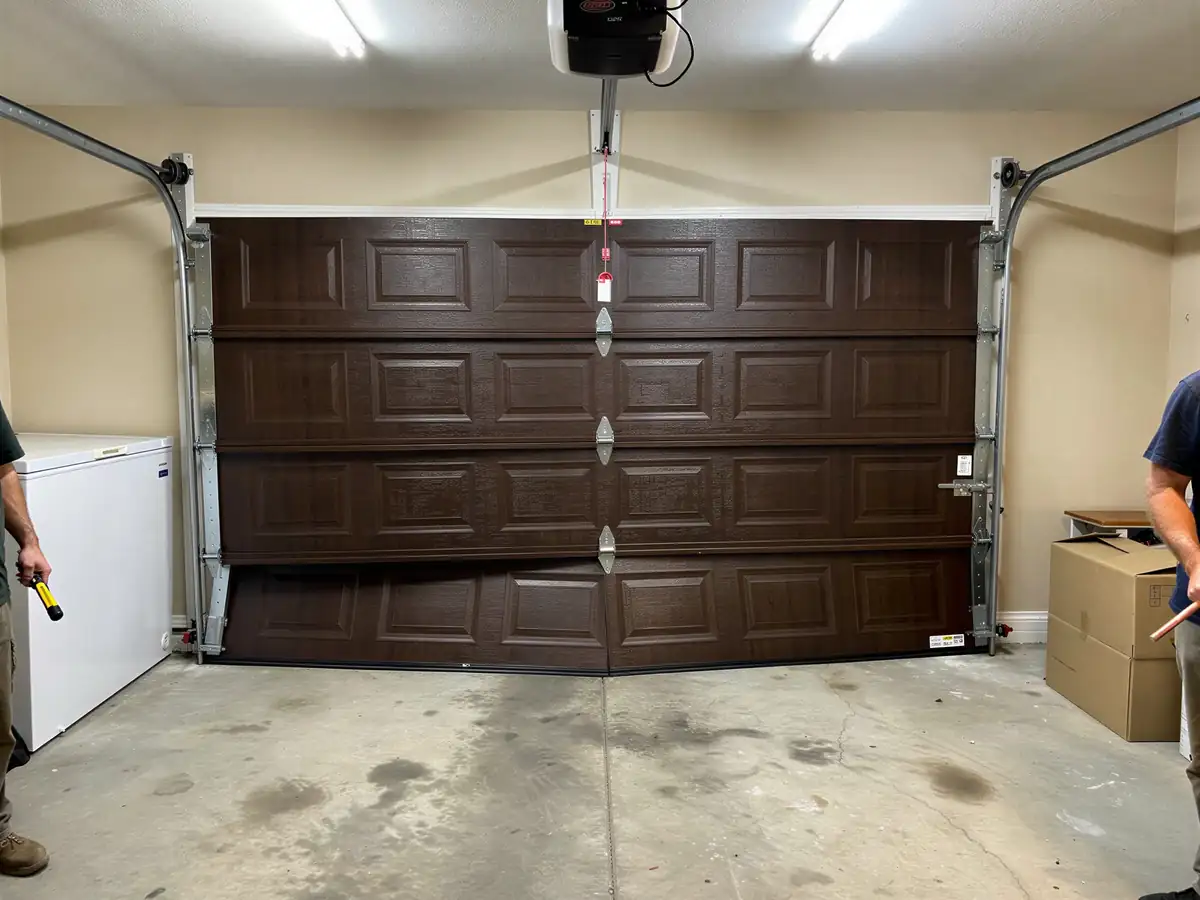
How It Shows Up
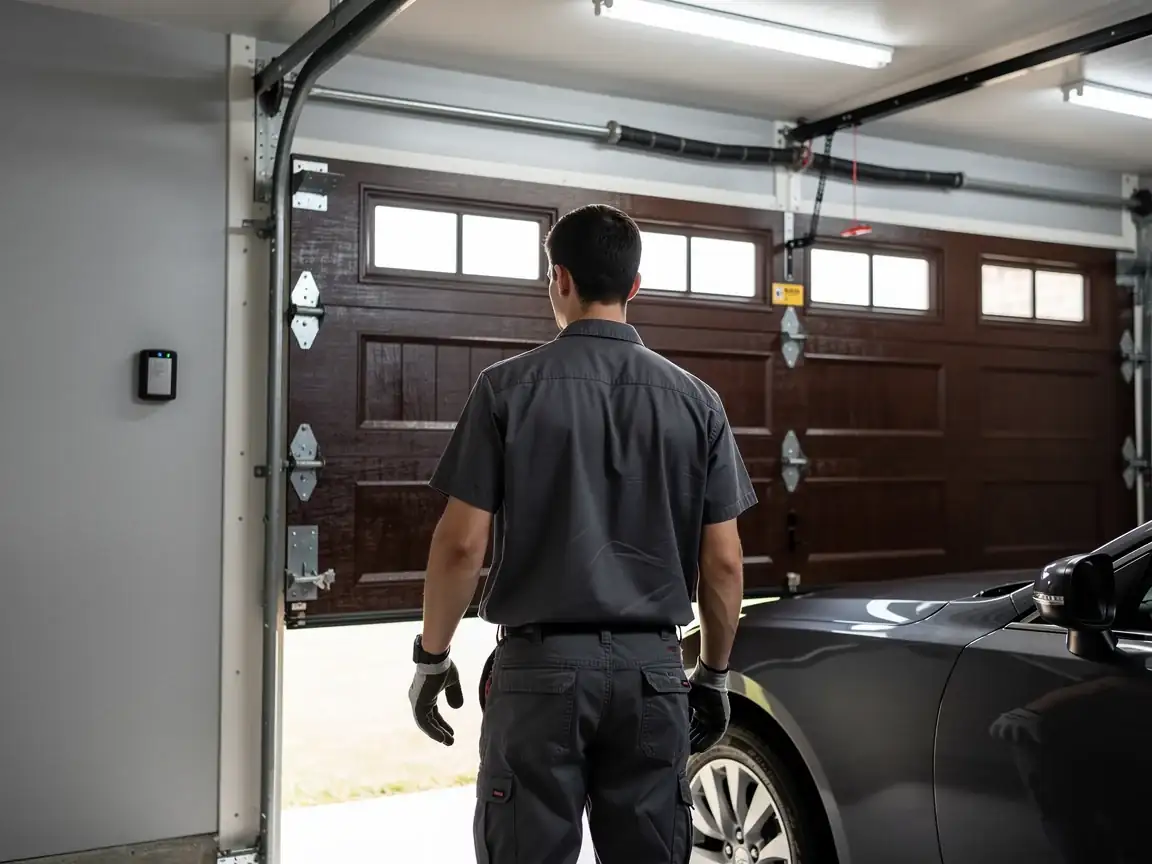
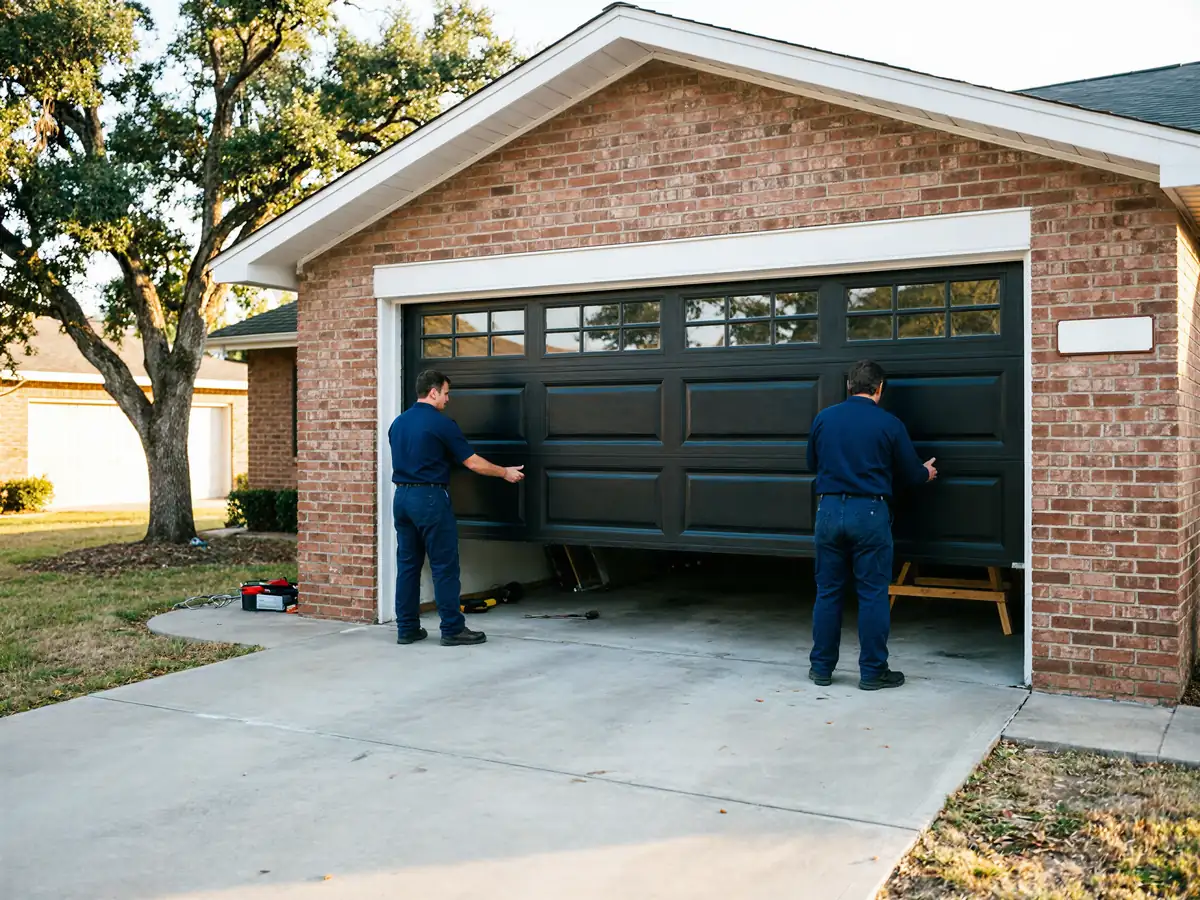
A door off track rarely announces itself all at once. Most owners notice a roller riding outside the rail, a panel that's started to lean or gap at one corner, or the door binding halfway up and refusing to go further. Sometimes it's quieter than that - a grinding noise on the way down, or the door closing crooked so one side touches the floor before the other.
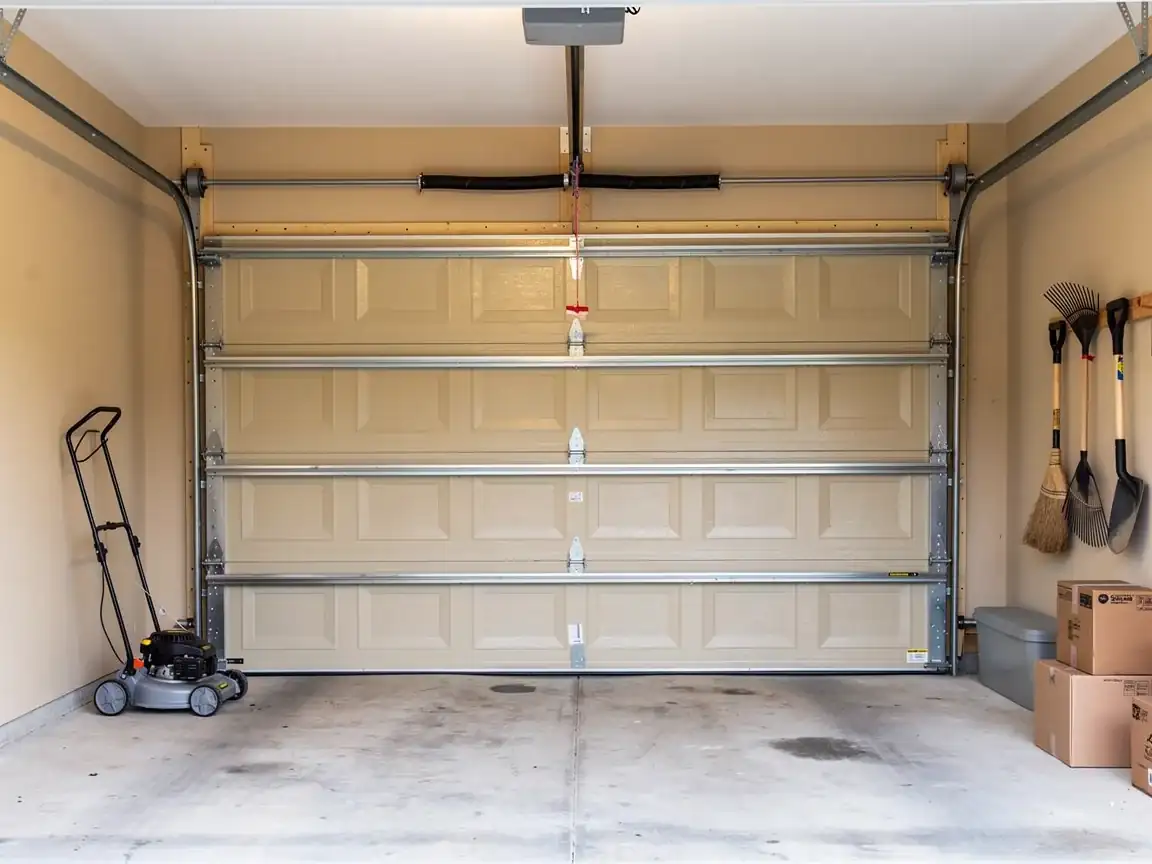
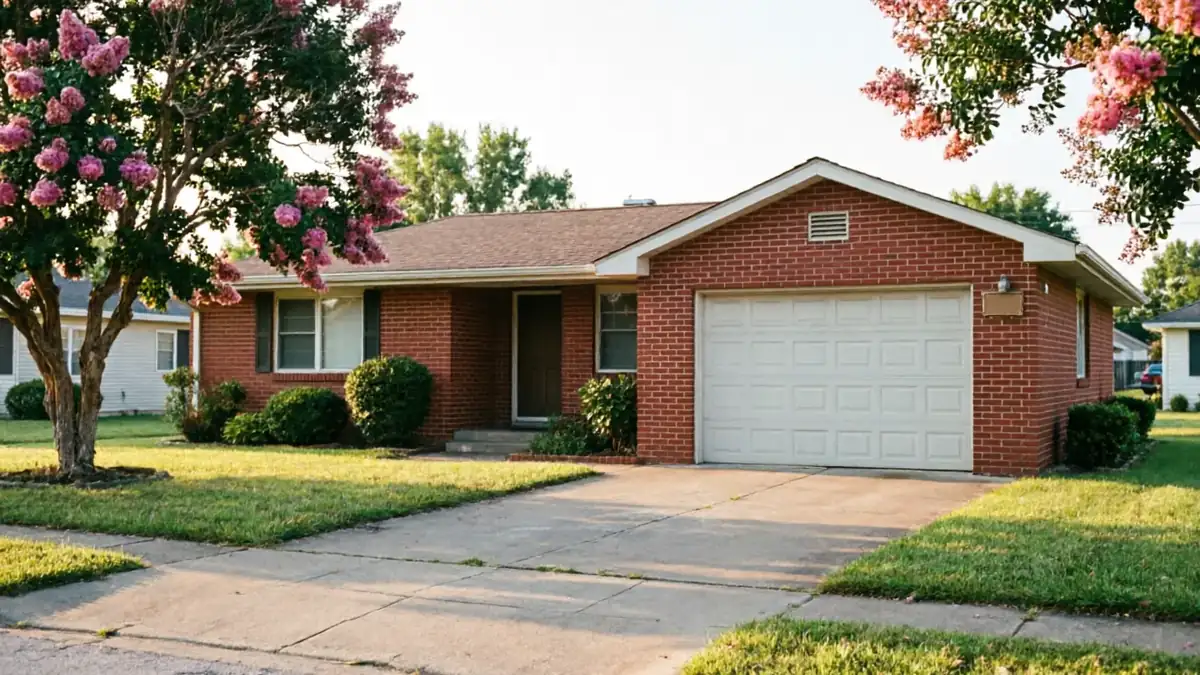
In Waco, we see this most on houses built in the 1959-1994 range, with a median build year of 1983. That stock mostly runs steel tracks bolted to original jamb framing, and after four decades the mounting brackets work loose, the track drifts out of plumb by a few degrees, and a roller finally pops free under normal use - often during an opener cycle, not a dramatic event. It's wear, not an accident, in the large majority of calls we see across the 13 areas we cover.
A door that's merely rattling in the track is a different problem than one that's actually derailed. If a roller has left the rail, don't run the opener again - each cycle can bend the track further or walk the door off its hinges, turning a $150 fix into a full track and roller replacement.
How to Book
Call us or use the site to get a technician out. Tell us whether the door is still closable by hand, whether the opener is still trying to run it, and which side the derailment is on - that tells us what to load on the truck before we leave the shop. We work across the Waco service area, including Woodway, Bellmead, Hewitt, Robinson, China Spring, and the other communities within roughly 18 miles of town, plus the closer-in neighborhoods.
If the door is wedged half-open, leave it there. Don't force it down or up by hand once it's visibly off the rail - you risk snapping a cable or dropping a panel. If you can safely do so, unplug the opener so nobody tries the remote while you're waiting.
Can You Do This Yourself
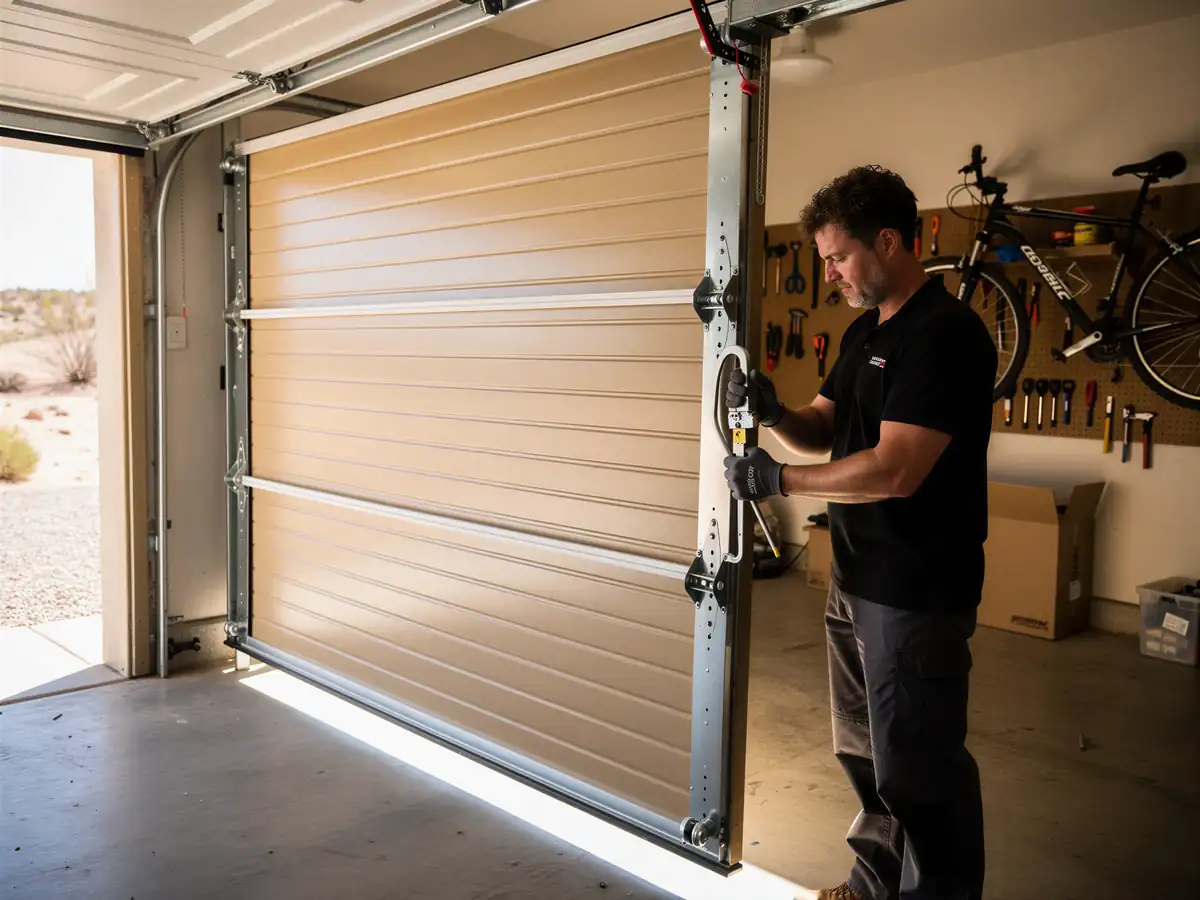
If a roller has simply slipped a few inches out of the track and the door still hangs straight
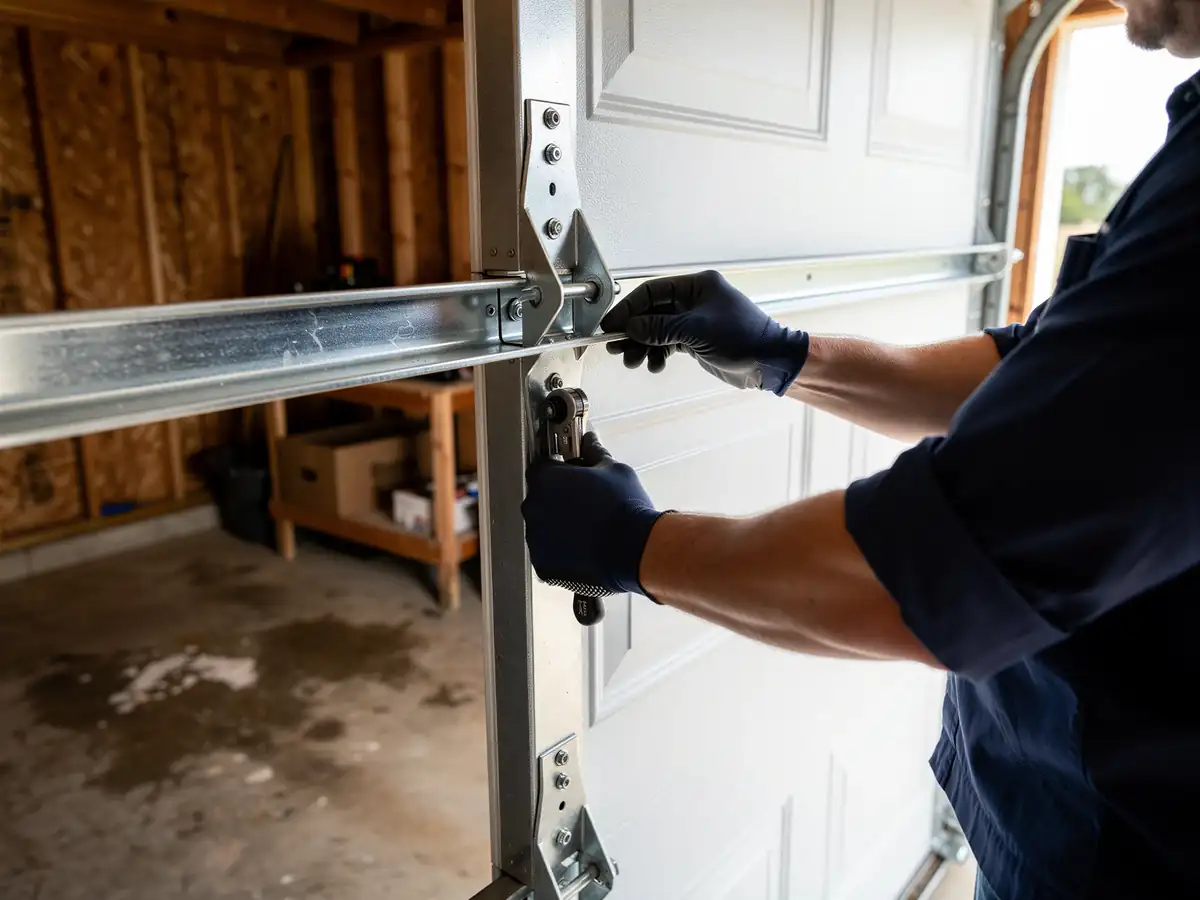
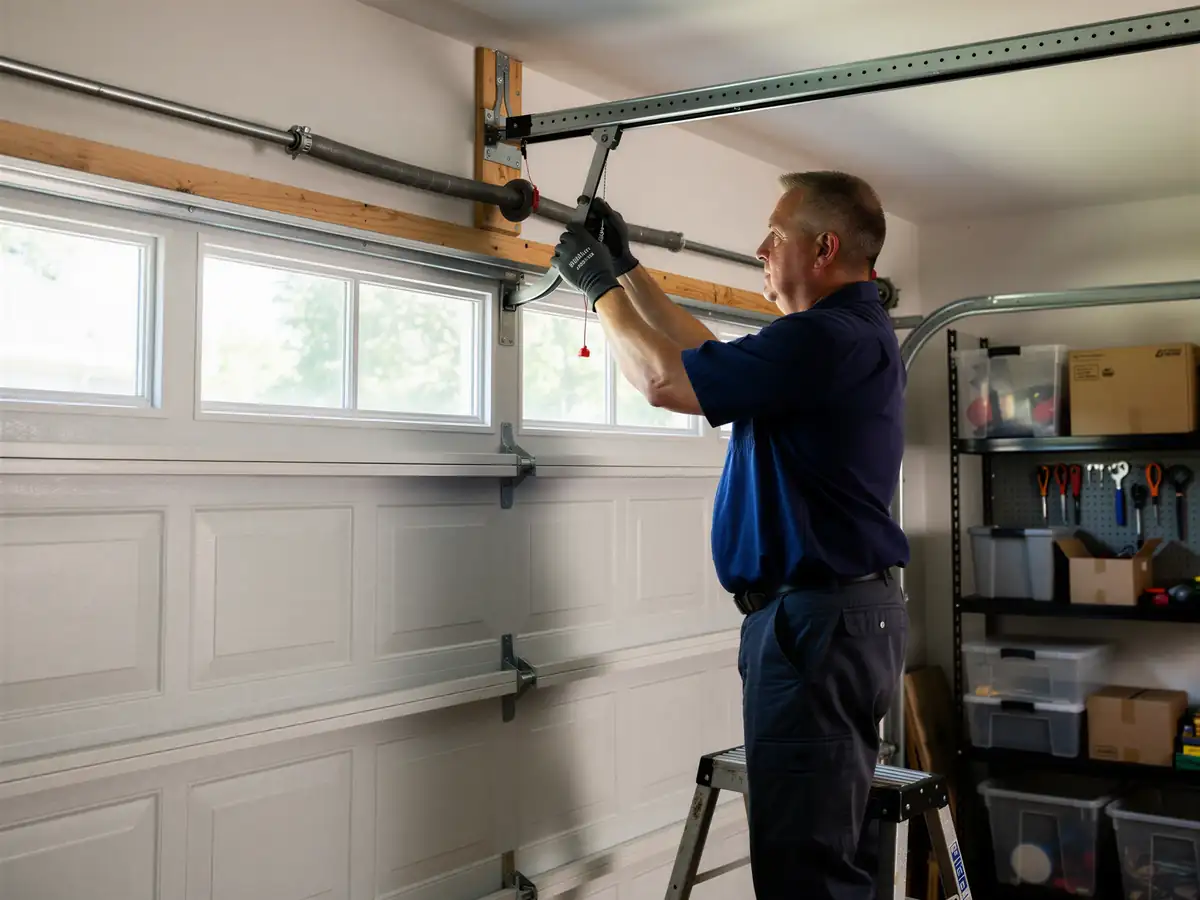
Some owners can walk it back in with the door manually supported and the opener disconnected - that's a reasonable DIY job if you're comfortable under a raised door. Tightening loose track brackets with the door closed is also within reach for most people with a ladder and a socket wrench.
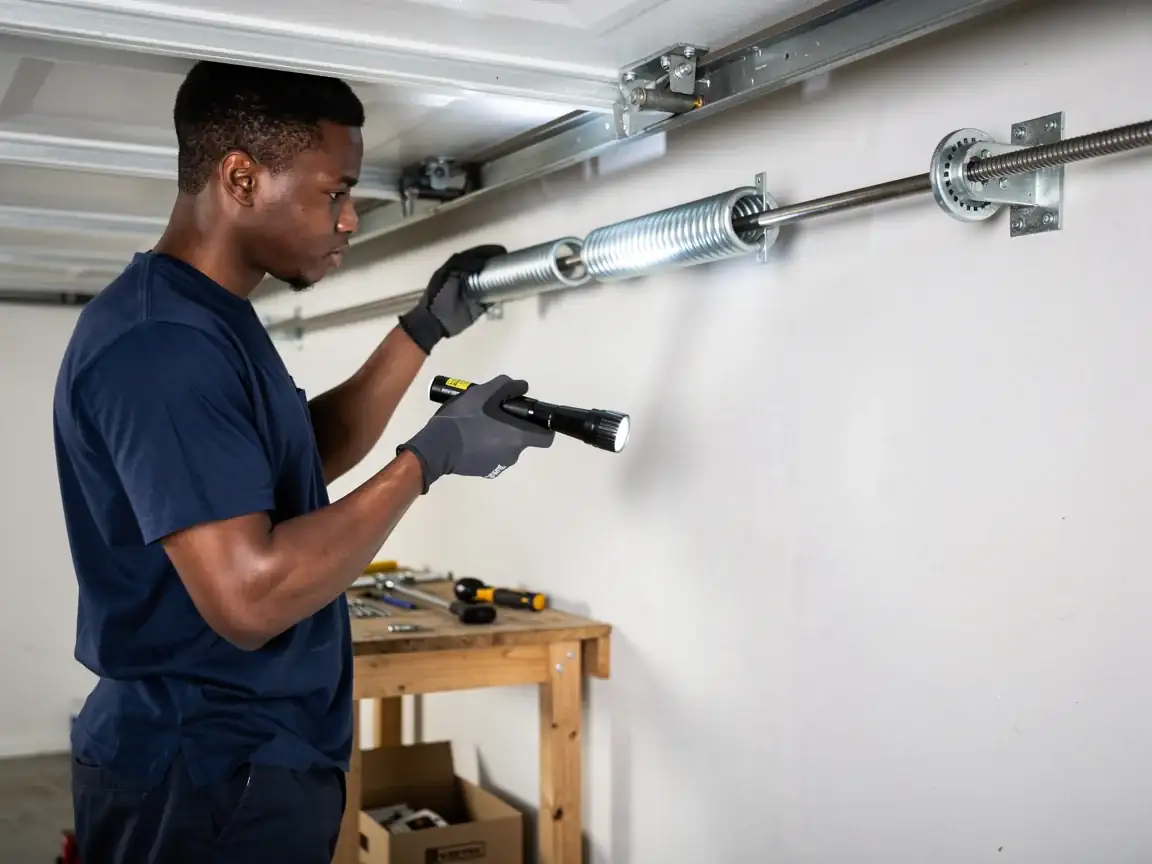
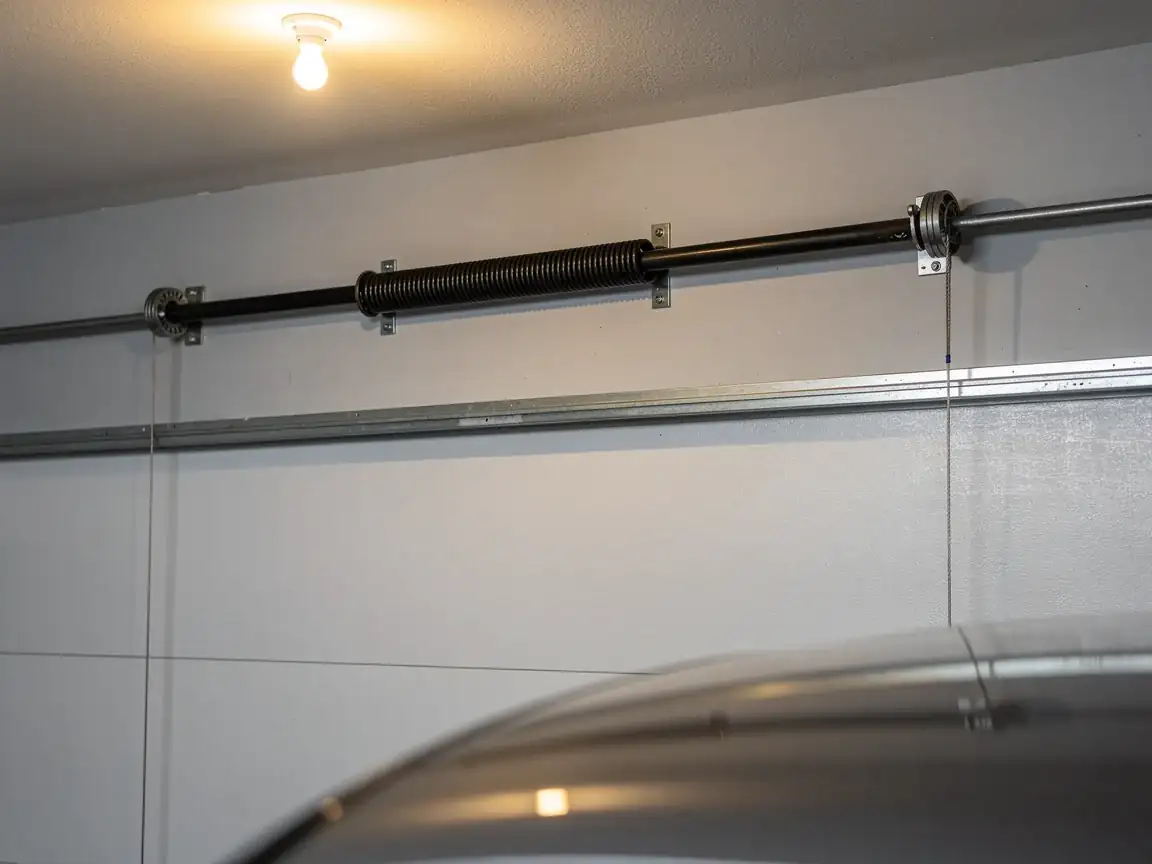
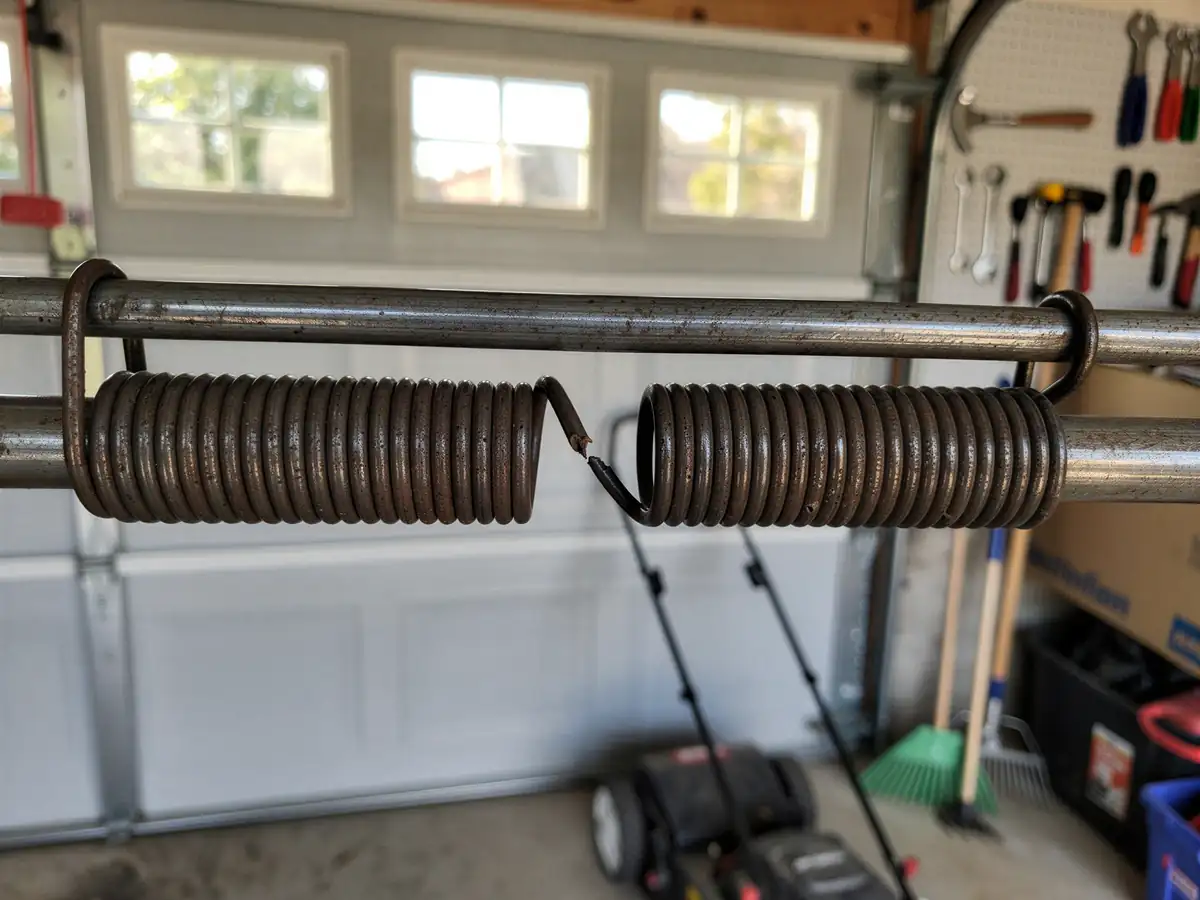
What isn't a DIY job is a door that's come off the track on one side while a torsion spring is still loaded
Or a track that's visibly bent or pulled away from the framing. Both of those involve stored spring tension and a panel that can swing or drop without warning. We're honest that this is where we draw the line in our own advice - if you're not sure which situation you're looking at, treat it as the second one and don't put your hands on it.
Why This Fails Locally
This isn't a climate-driven failure the way it might be in a region with real freeze-thaw cycling or extreme heat swings - Waco sits in a moderate heat band, so track metal isn't expanding and contracting hard enough to be the main cause. The driver here is age and mounting hardware. Across the service area, housing mostly dates from the 1980s and 90s, matching the 13 named communities we work in, and a lot of those garages still have their original track brackets fastened straight into wood jambs that have since shrunk, split, or simply loosened their grip on the lag screws.
With 14,225 owner-occupied houses in the service area and a median household income of $76,833, we see a consistent pattern: owners maintain the visible stuff - paint, weatherstripping, the opener itself - and the track hardware goes two or three decades without ever being checked, because it's bolted up out of sight. By the time it fails, the bracket holes have usually worn oval, which means a repair often needs new brackets, not just a re-tightened bolt.