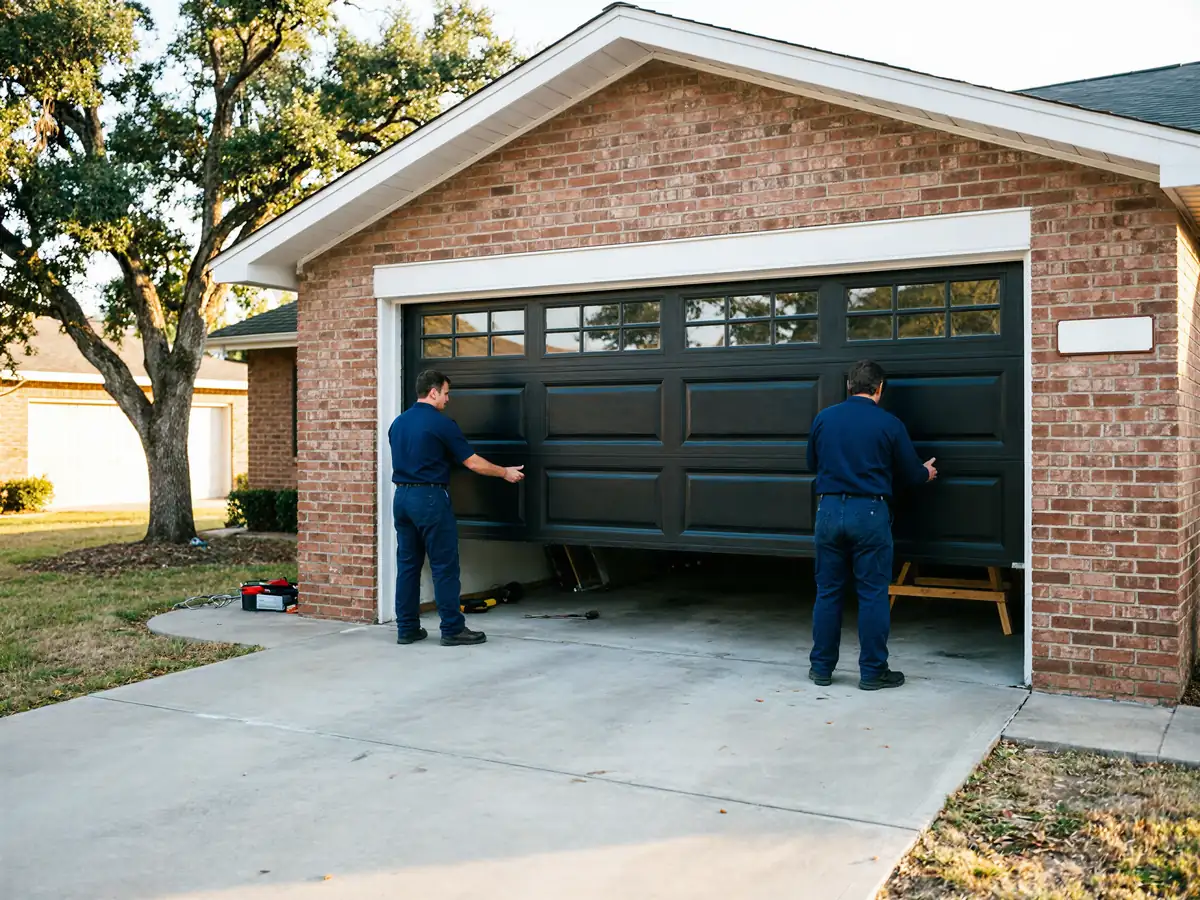
How Long You Are Without the Door
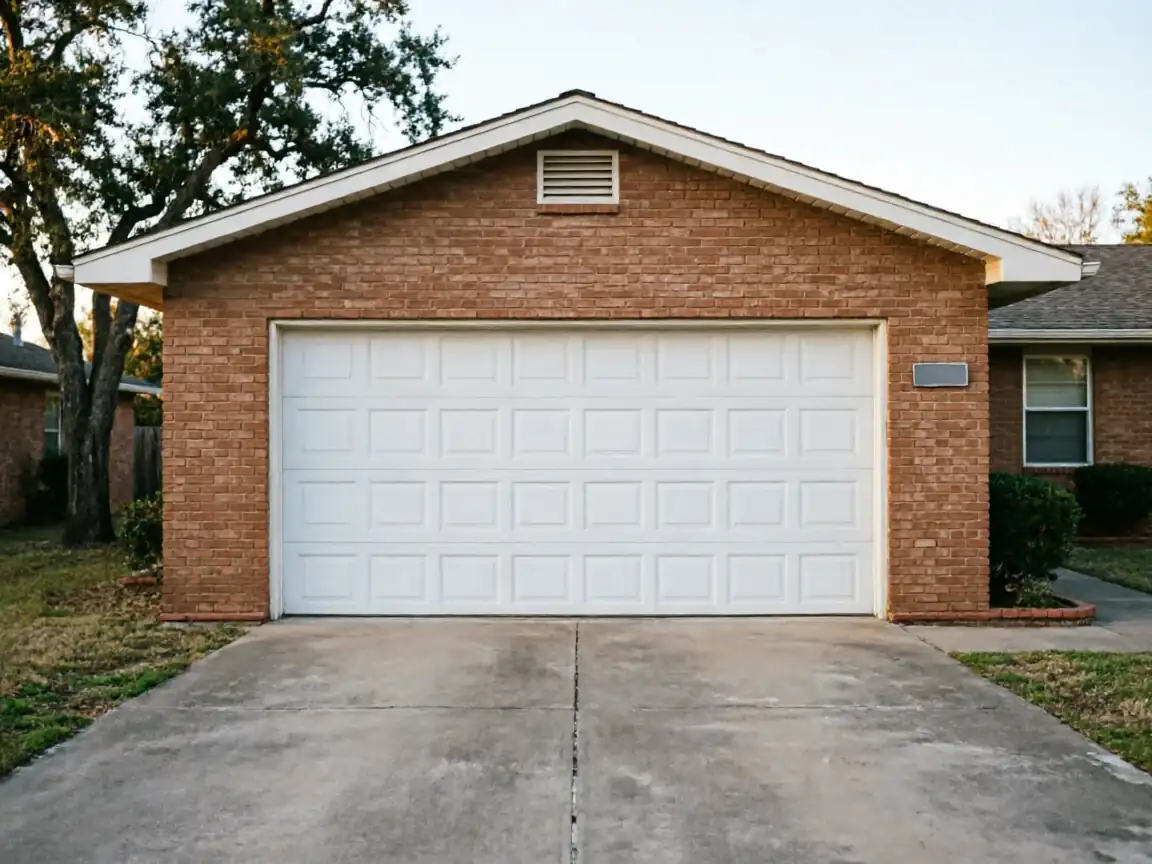
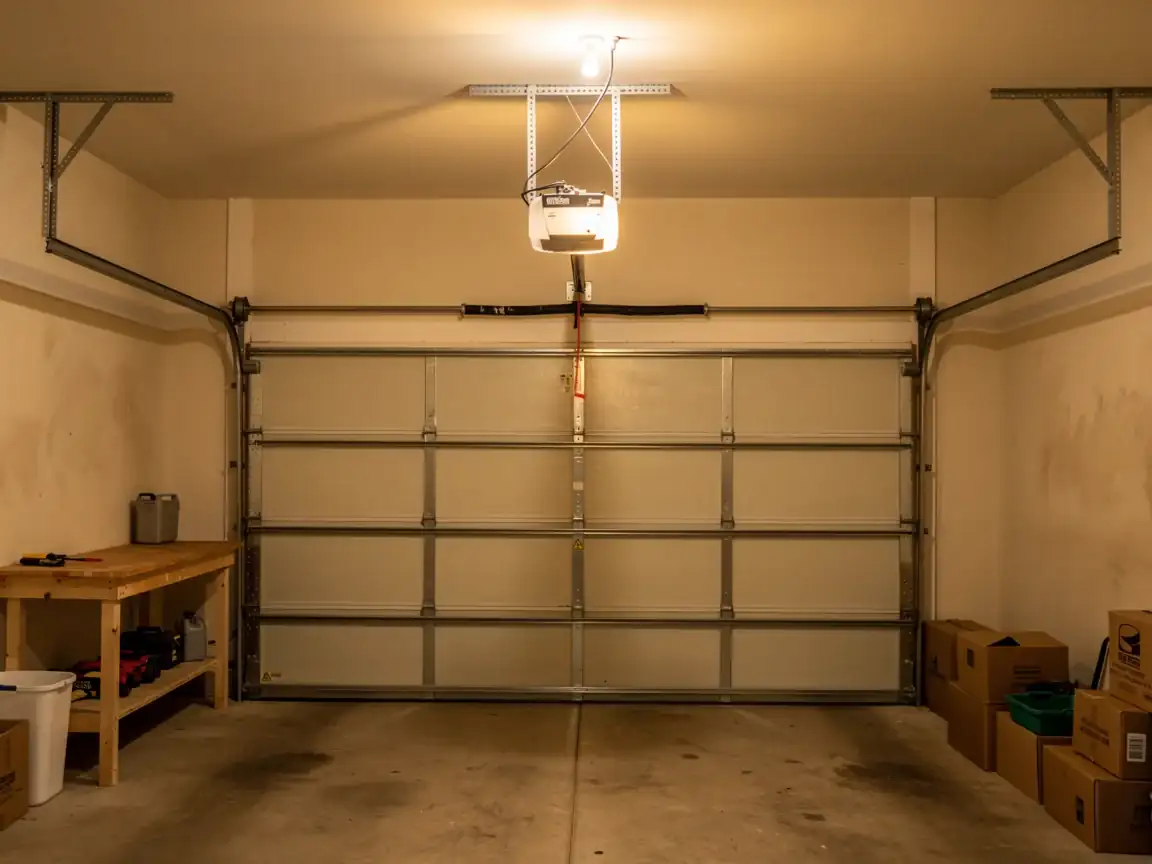
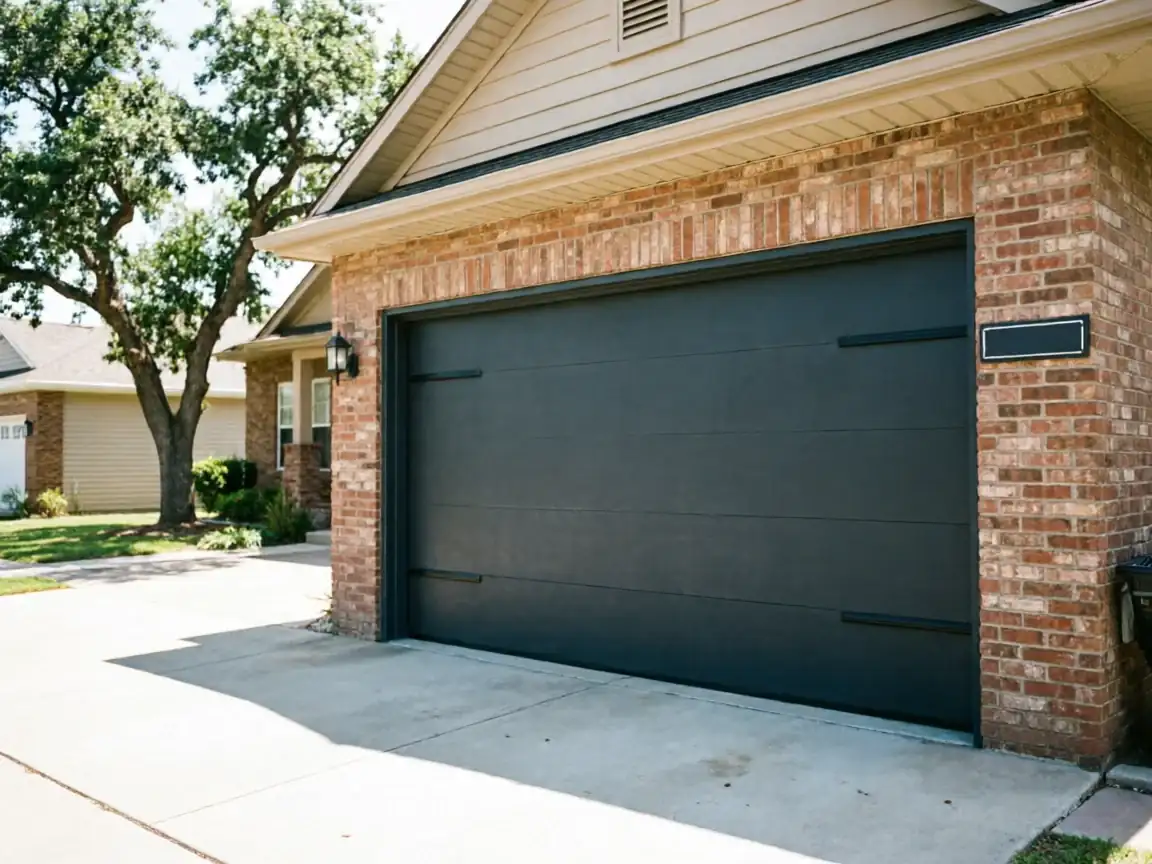
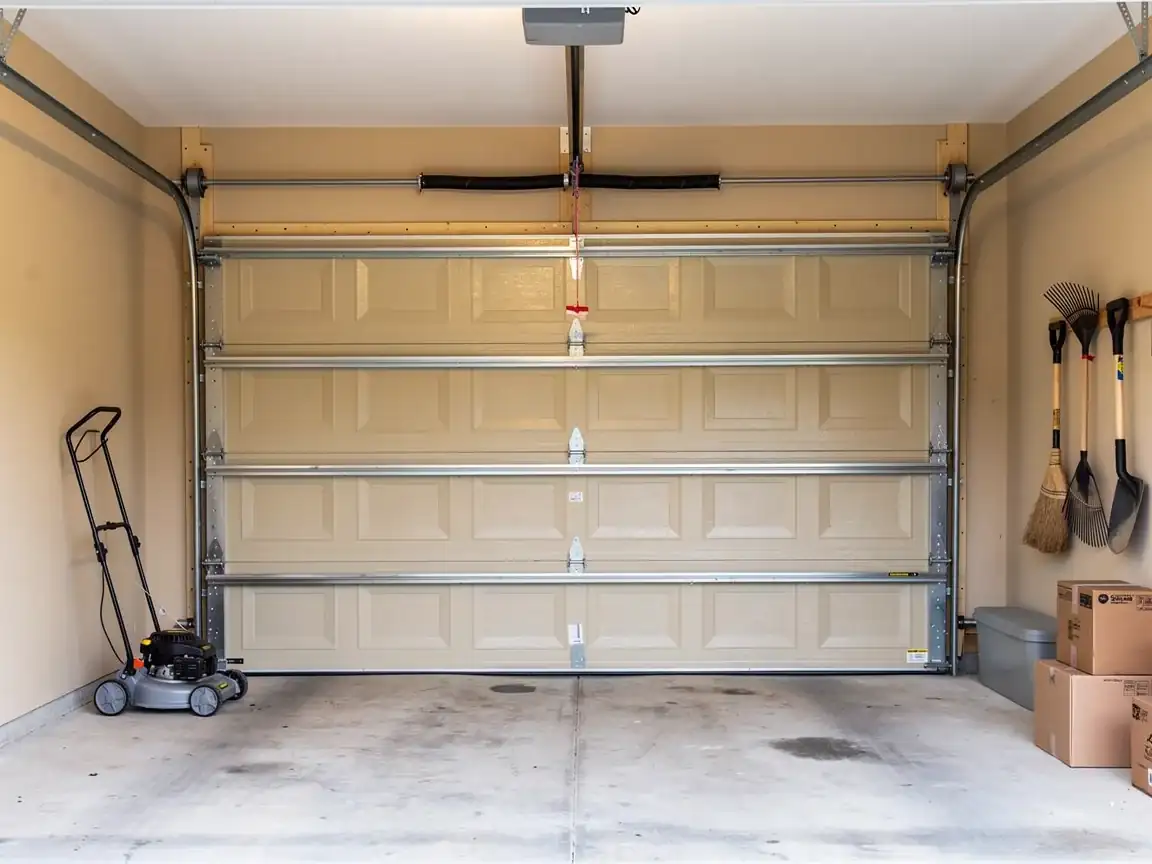
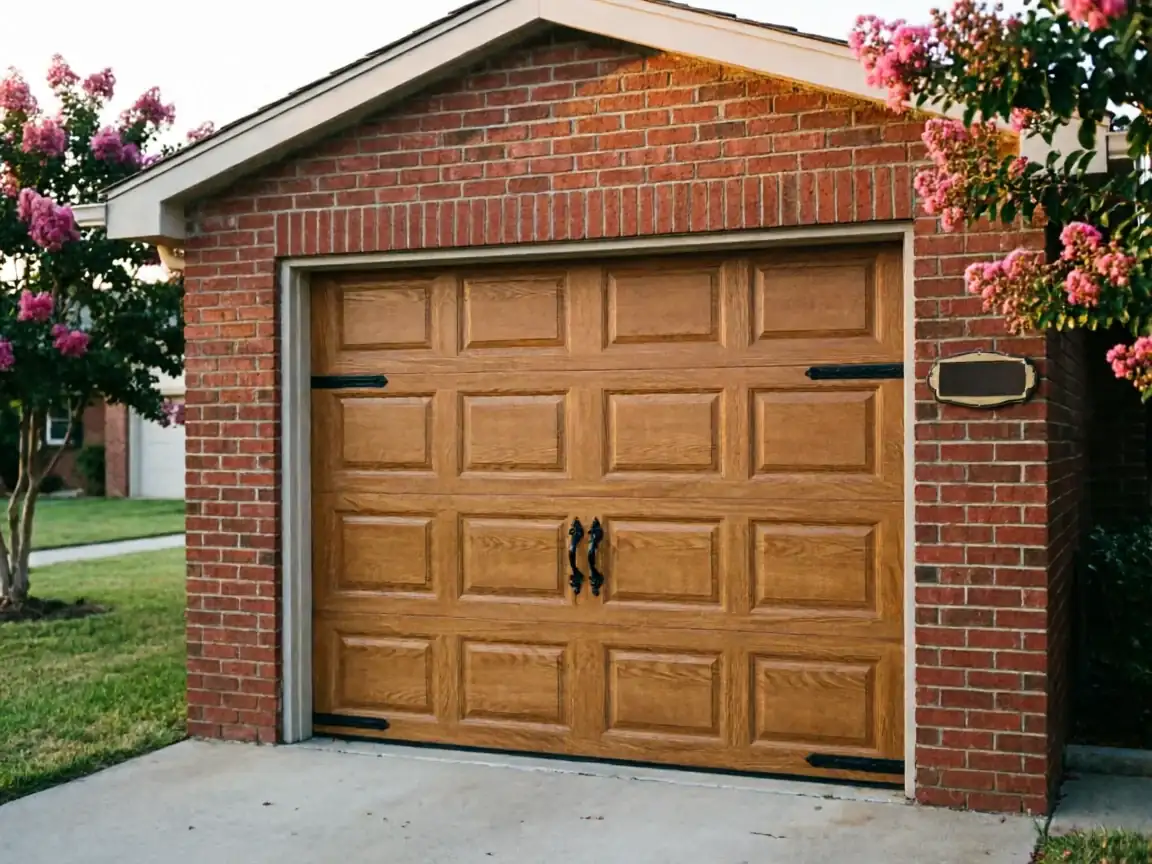
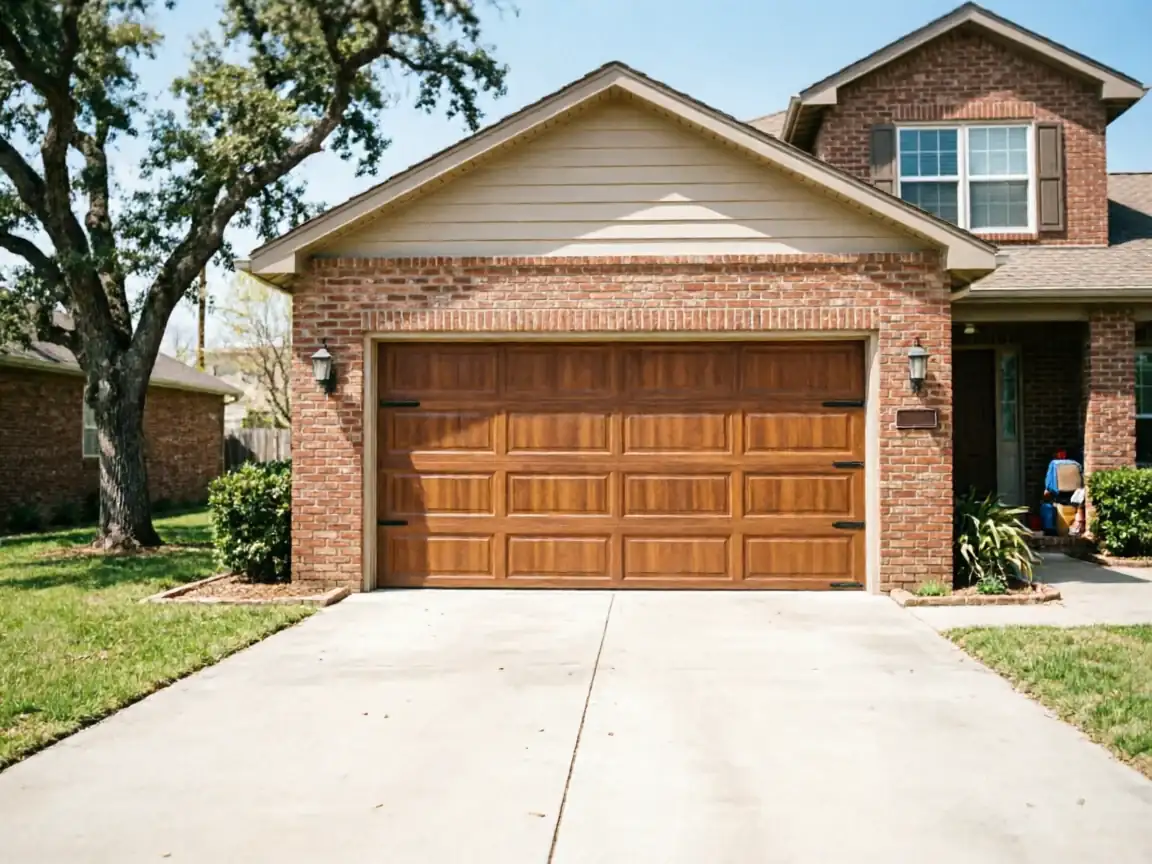
Most garages in Robinson went up around 1990, and the doors that came with those houses are steel sectional units - raised-panel, embossed with a wood-grain texture that was standard for builders in that period. They're usually 16x7 double-wide sections or 8x7 singles, non-insulated or lightly insulated depending on the builder, hung on standard-lift torsion hardware. That construction matters here because a damaged section on a 1990-vintage door is almost always a standard panel size, which means we're not waiting on a custom order the way you would with an older or oddly-sized door elsewhere in the wider Waco area.
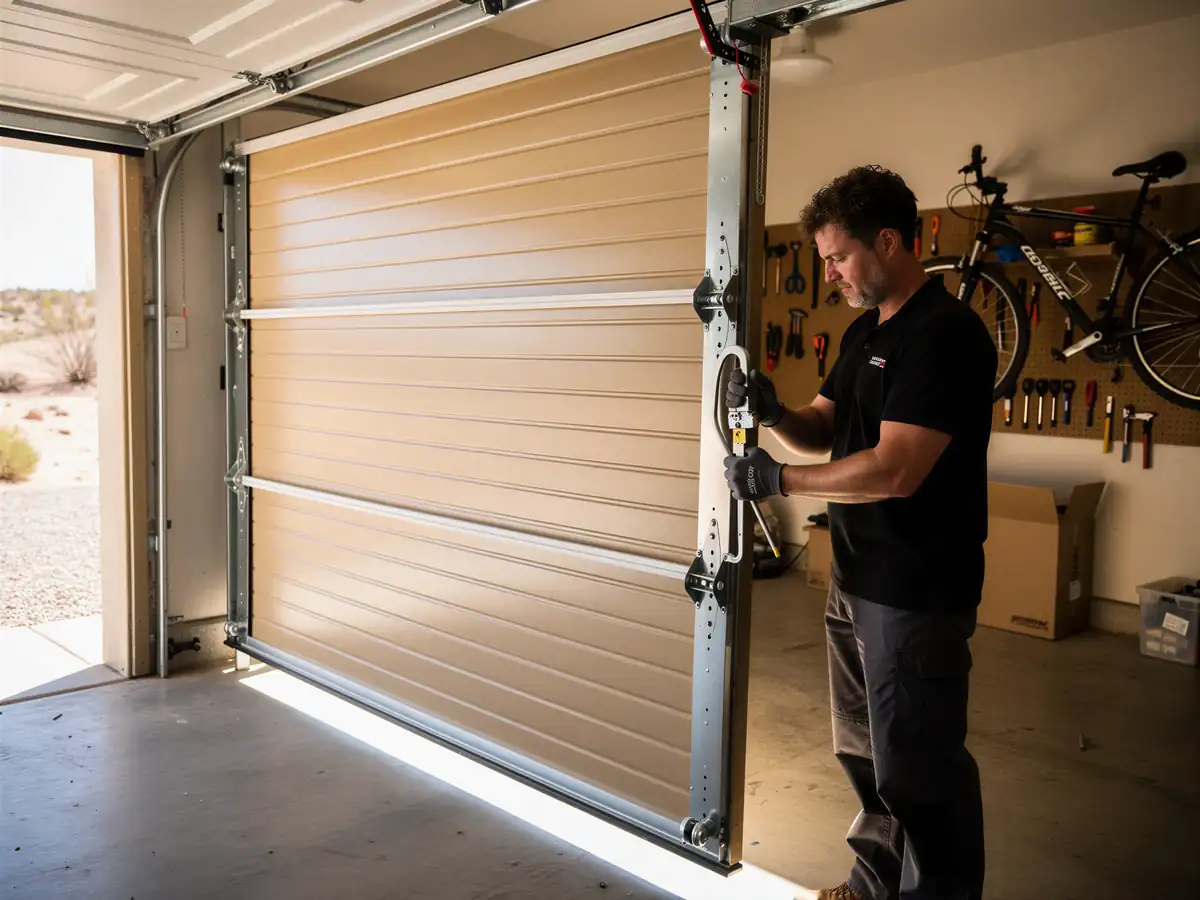
Robinson sits about 8 miles out, and we come from Waco rather than running a branch out of town. Once we've confirmed the panel profile and the section size over the phone or from photos, the part can usually be sourced without a long lead time, since steel sectional panels from the 1980s-90s building boom are still a common stock size. The door itself can often stay operational on the remaining sections while we wait, as long as the track and rollers on that side weren't bent in whatever hit the panel.
How It Shows Up
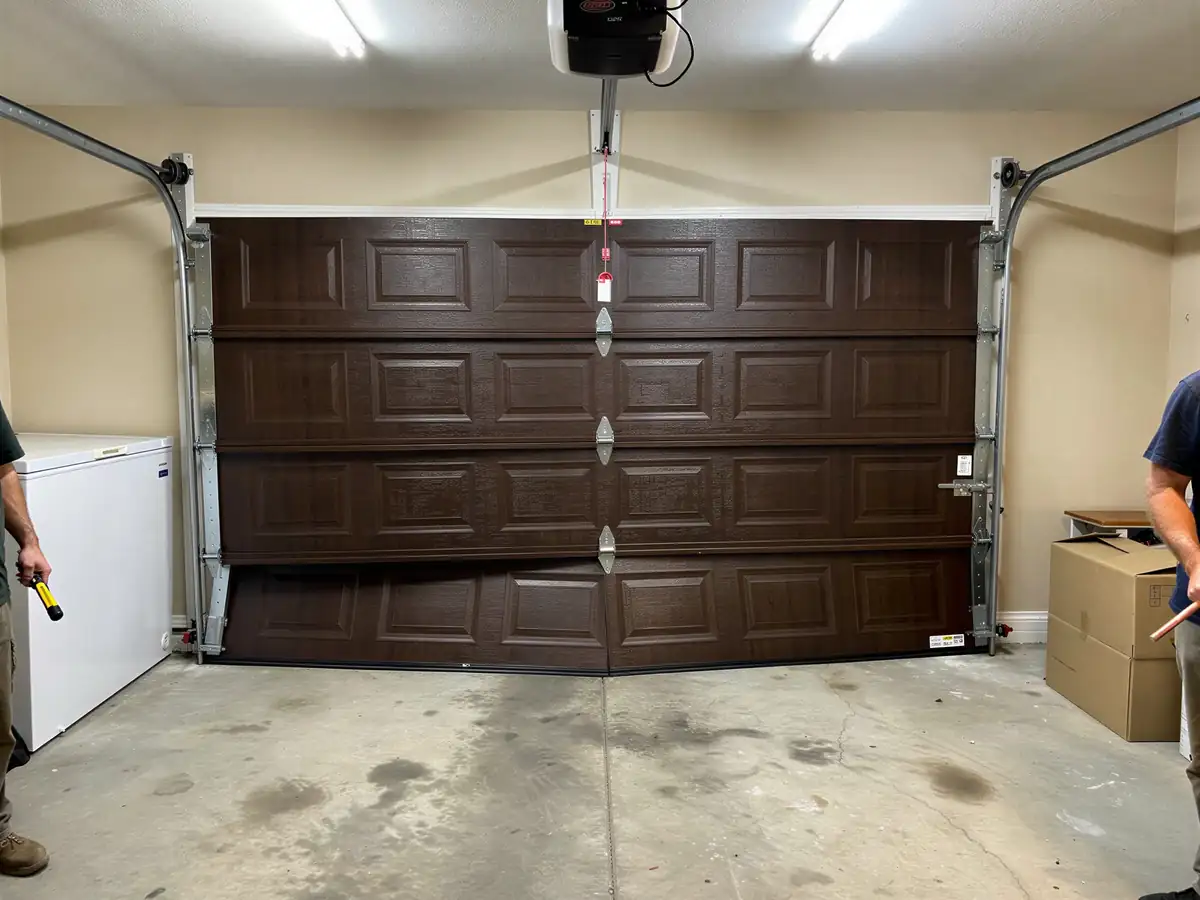
On a steel sectional door from this era, panel damage usually comes from one of two directions: something backed into the bottom section, or the garage took a hit from a mower, trailer, or basketball pole and dented a middle panel. Because these doors use raised-panel steel rather than flat aluminum, a dent in one section often shows as a crease that runs the width of the panel rather than a small dimple - the embossed ridges concentrate the stress.
Rust is the other common cause in houses built through the 1990s, especially along the bottom section where water sits after rain. A rusted-through bottom panel usually isn't the only problem - the rot can reach the hinge screws, so that section's hardware needs a look too. What you want to know before anyone comes out: is it one section or two, is the damage to the panel face or to the hinge rail, and did the door still track straight when you last ran it. That tells us whether this is a panel swap or something that also touches the track.
What the Repair Takes
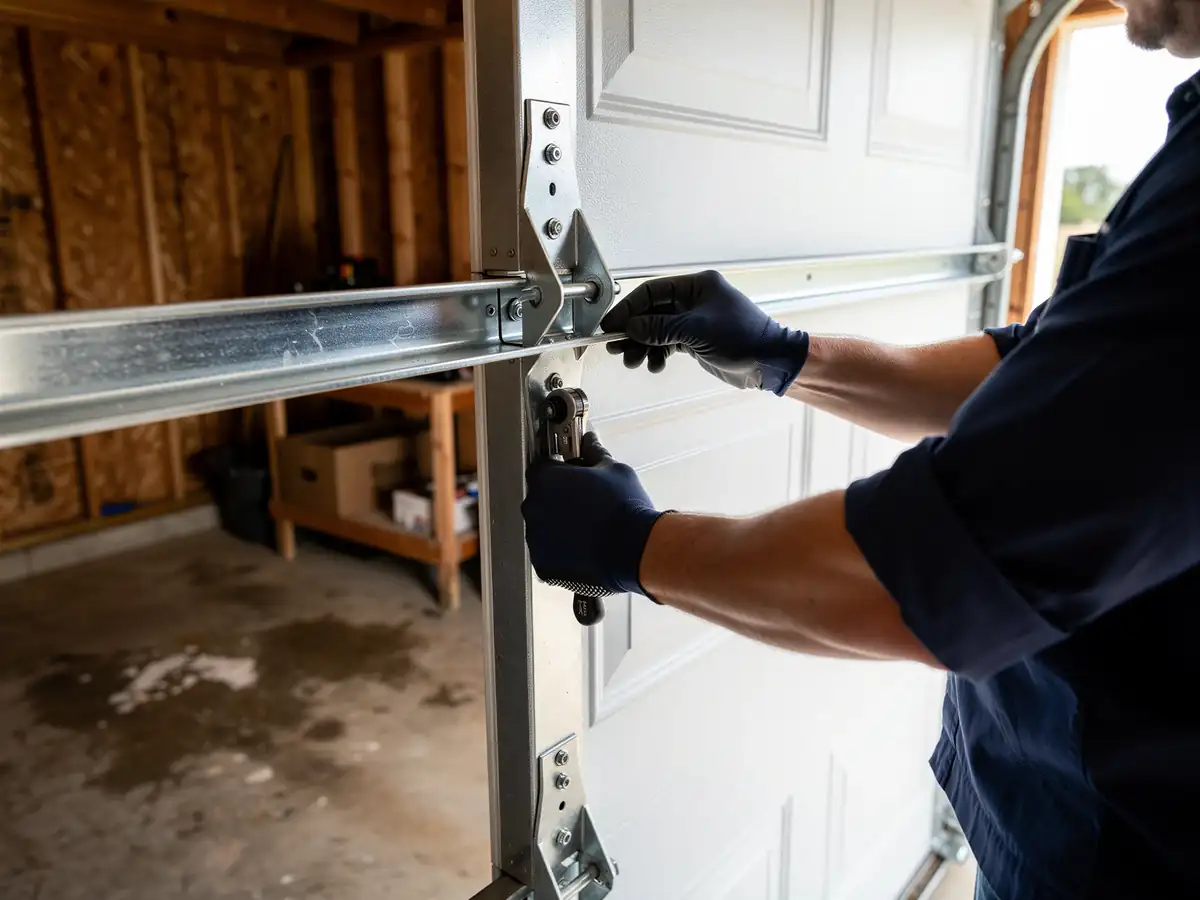
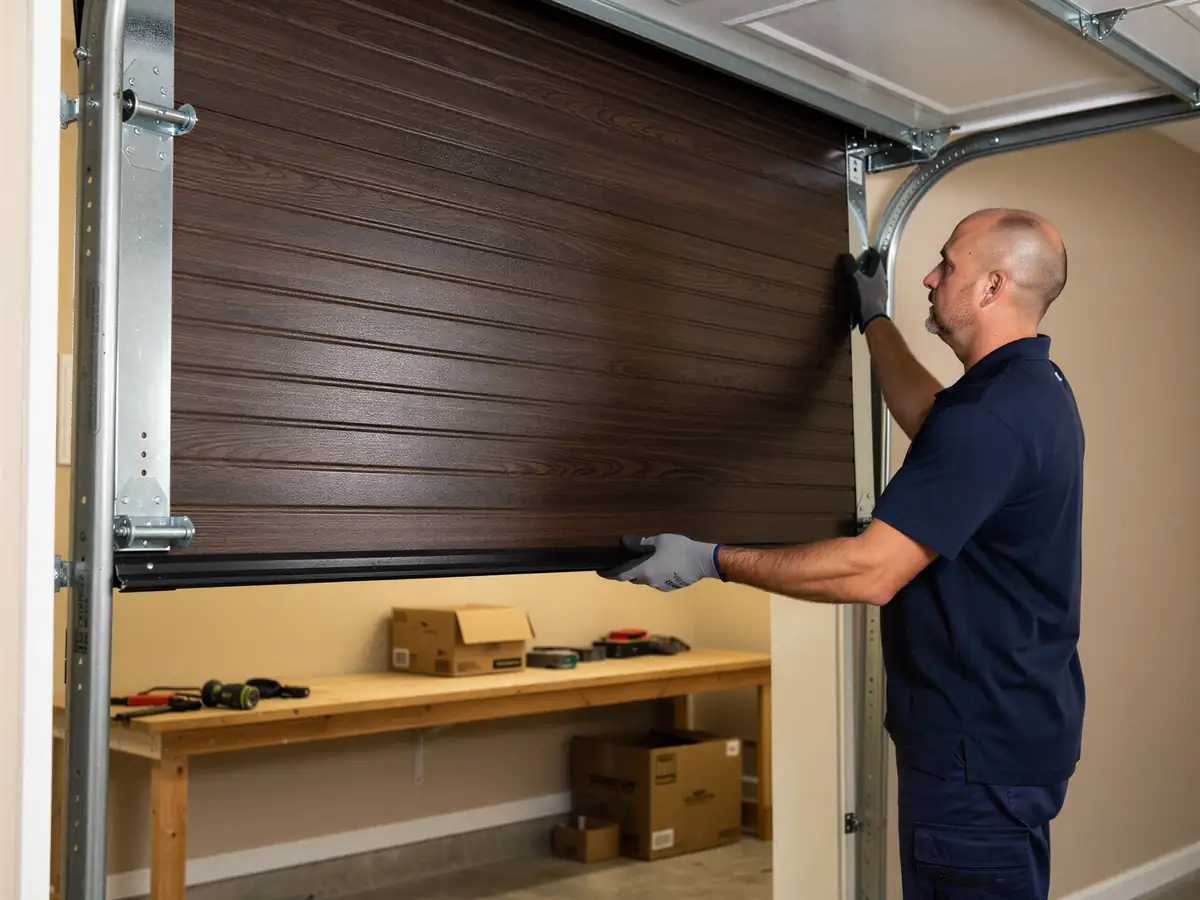
A single-section swap on a standard 1990s-era steel door is a bolt-off
Bolt-on job once the matching panel is on hand - the hinges and rollers from the damaged section transfer to the new one if they're not bent or rusted through. Two adjacent damaged sections, or damage that reaches the end hinge or the vertical track, takes longer and sometimes means the whole door is a better call than patching two panels on an otherwise 30-plus-year-old door.
Here's the honest limit
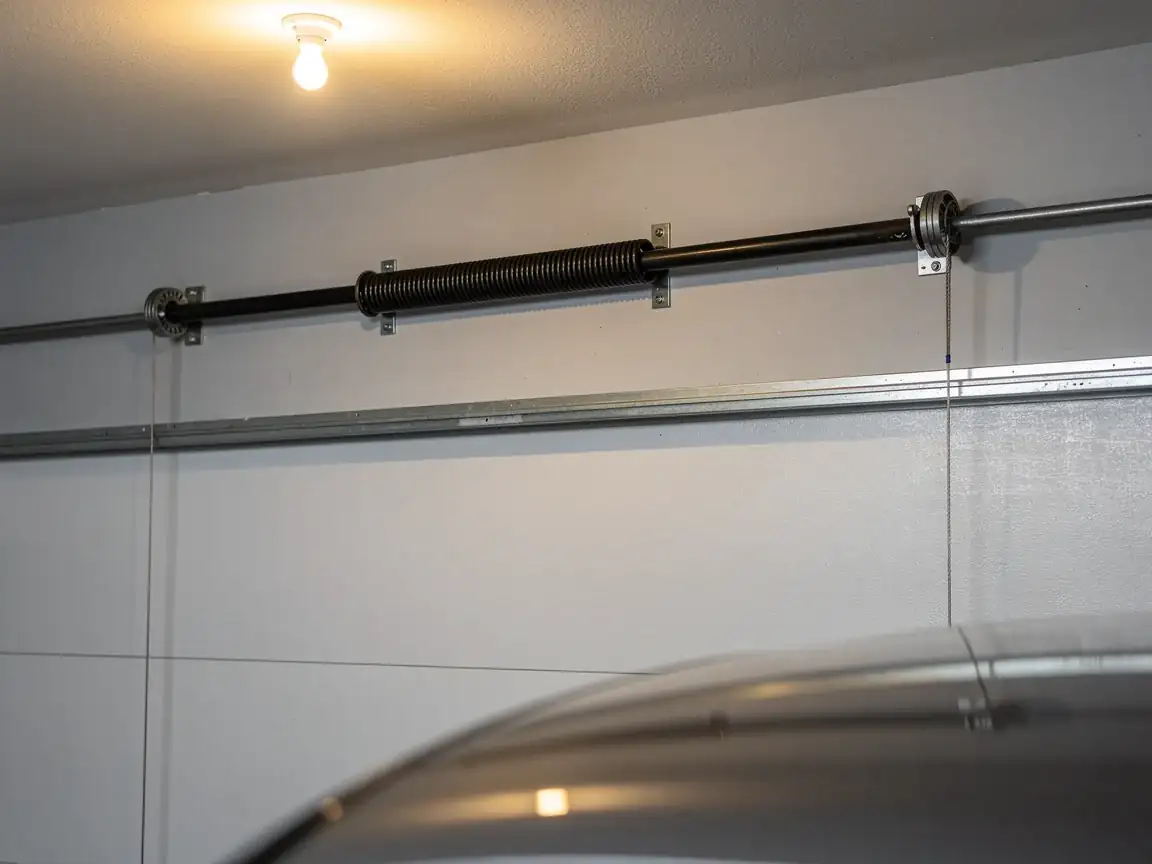
If the door is already near the end of its service life - faded, chalky paint, multiple rust spots, a spring that's clearly tired - spending money on a single panel to match a shade and finish that doesn't exist anymore often isn't worth it. We'll say so rather than sell you a panel that'll look patched. If the color match isn't close and that bothers you, full replacement is the straighter path, and that's a different job than this one.
How to Book
Have the section size and the door's rough age ready - most Robinson houses are around 1990, give or take a few years either side depending on when that particular street was built out - and a photo of the damaged panel if you can get one. That's usually enough for us to tell you whether it's a straightforward panel order or something that needs a look in person before we quote it.
We travel the 8 miles out from Waco for this work; there's no local branch, so scheduling runs through the same crew that covers the rest of the service area. If you're not sure whether what you're looking at is a panel problem or a door that's past the point of patching, say so when you call - we'd rather tell you honestly over the phone than show up and find out the easy fix isn't actually the right one.