How to Book
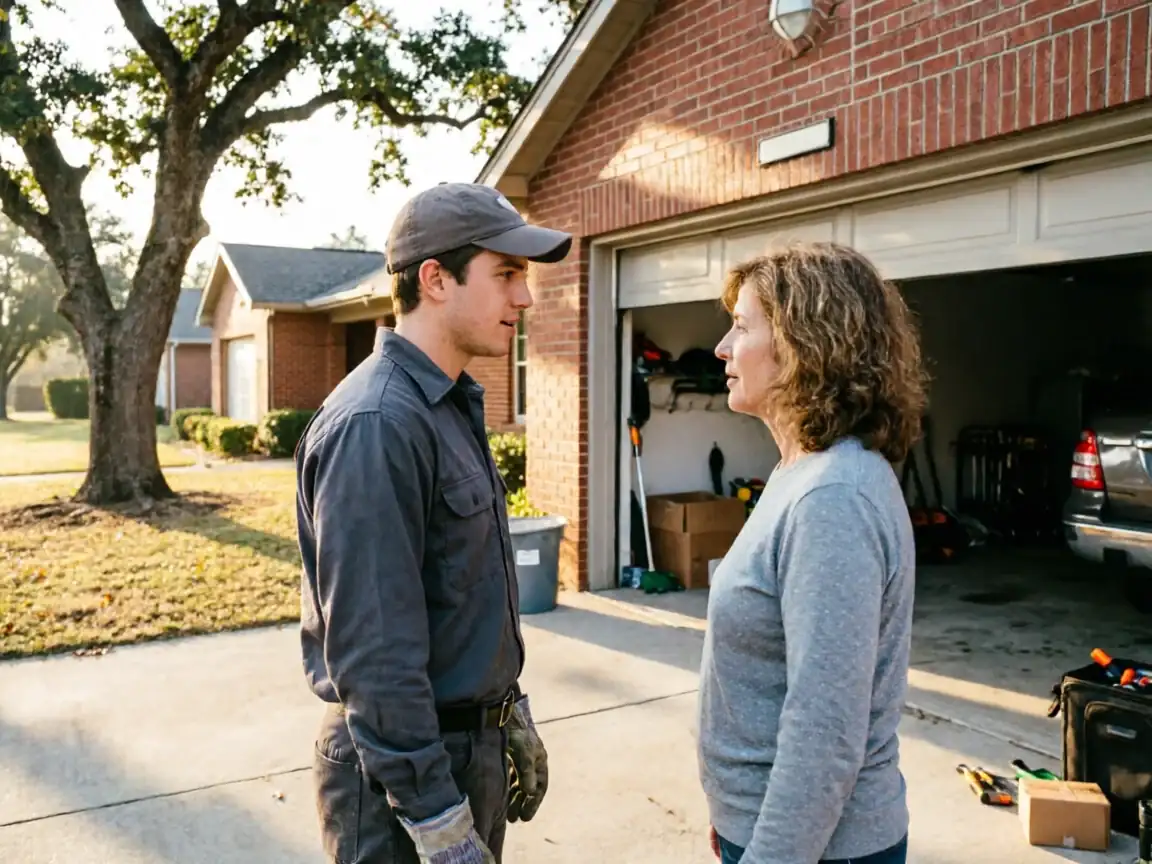
We're based in Waco and drive out to Woodway, about 5 miles down the road, so there's no local branch number to look up. Call the main Waco line and tell the dispatcher you're in Woodway - that's enough for us to pull the right springs and rollers before the truck leaves the shop, since most doors out here date to roughly the same build year.
We don't run a separate Woodway crew or a separate price list. One company, one set of trucks, one set of parts bins stocked for the housing stock across this whole service area. If you've got a two-car steel door installed when the house was built in the mid-1970s, say so when you call - it changes what we load before we drive over.
See service near Woodway for the surrounding towns we also cover, or check the main Waco service page for the full list of repair and install work we do. This page is just the Woodway-specific part: what's actually on these doors and what it takes to fix them.
Stocked Parts
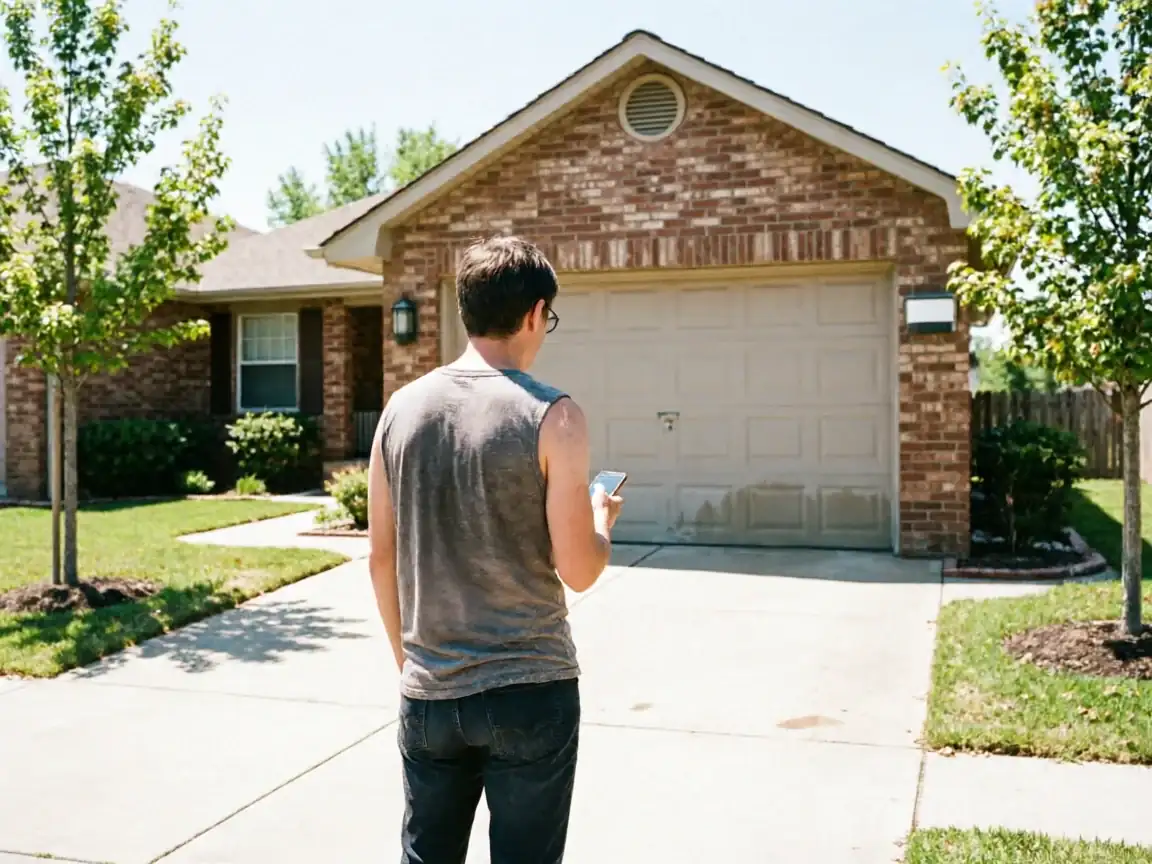
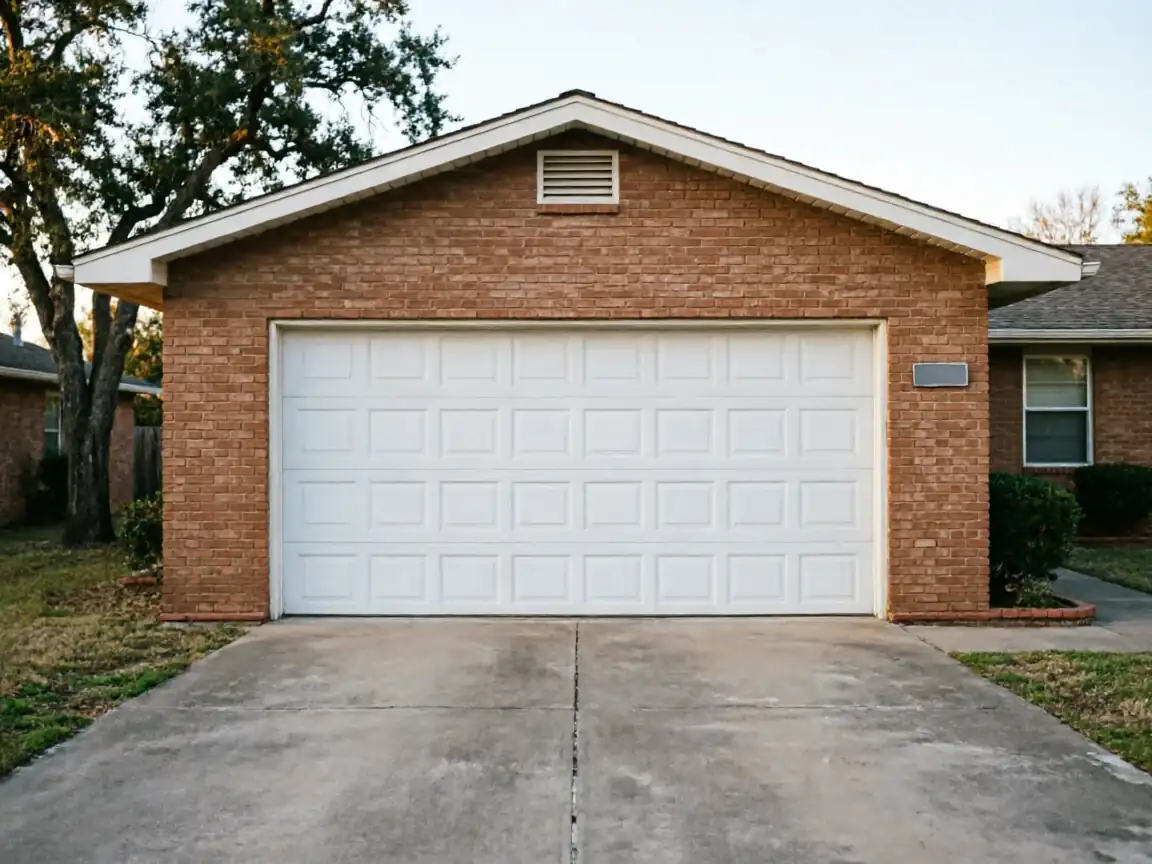
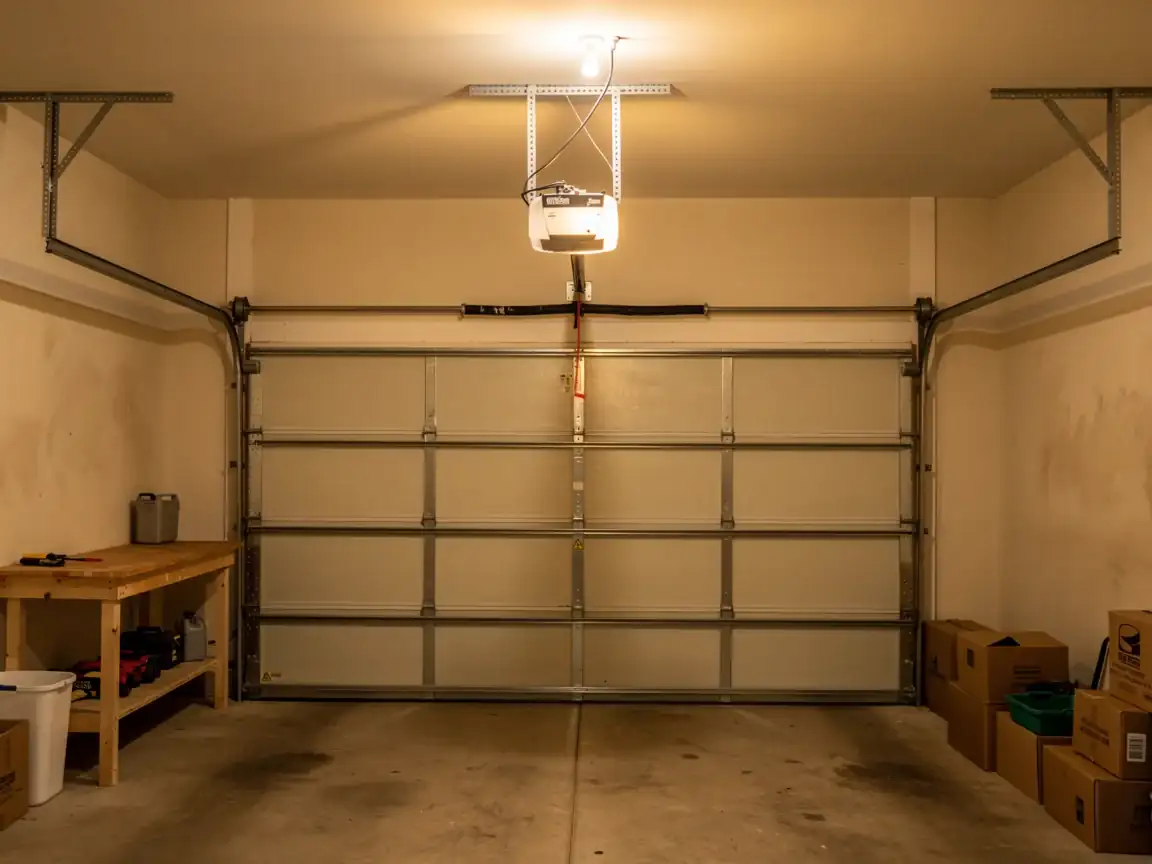
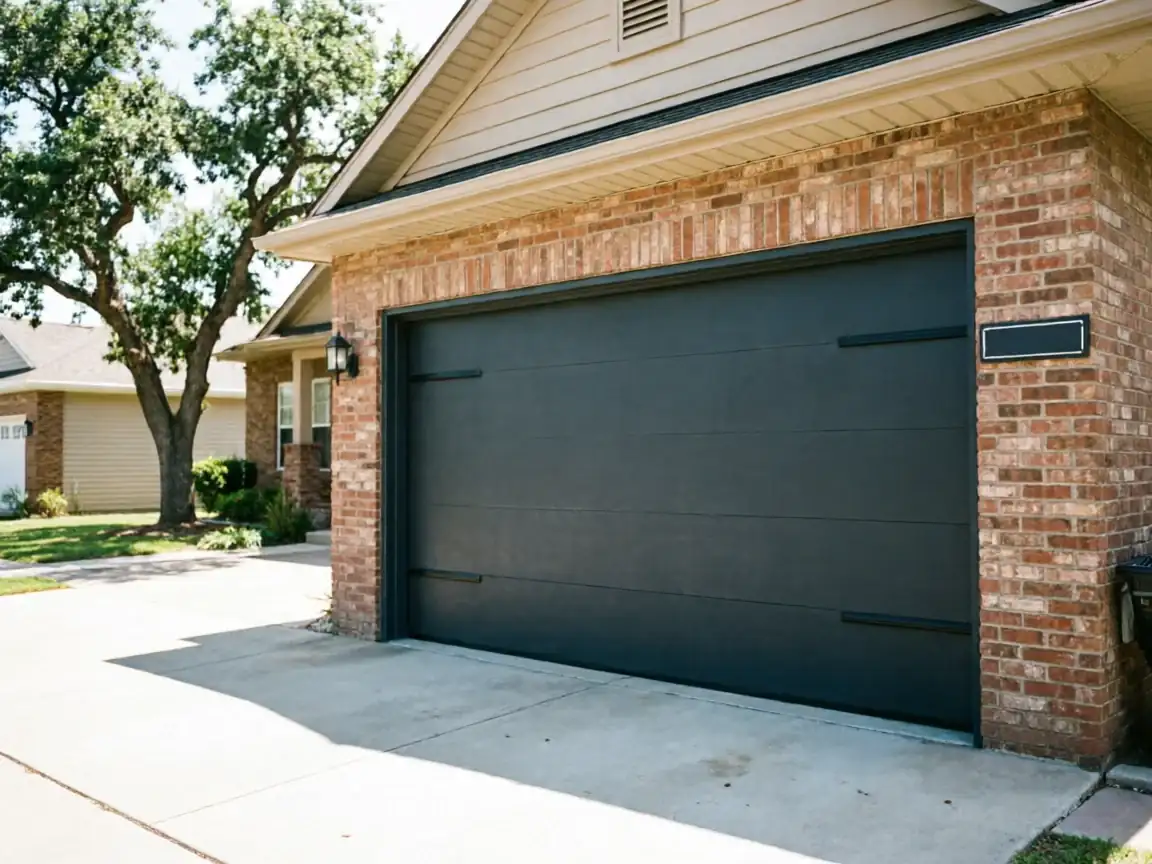
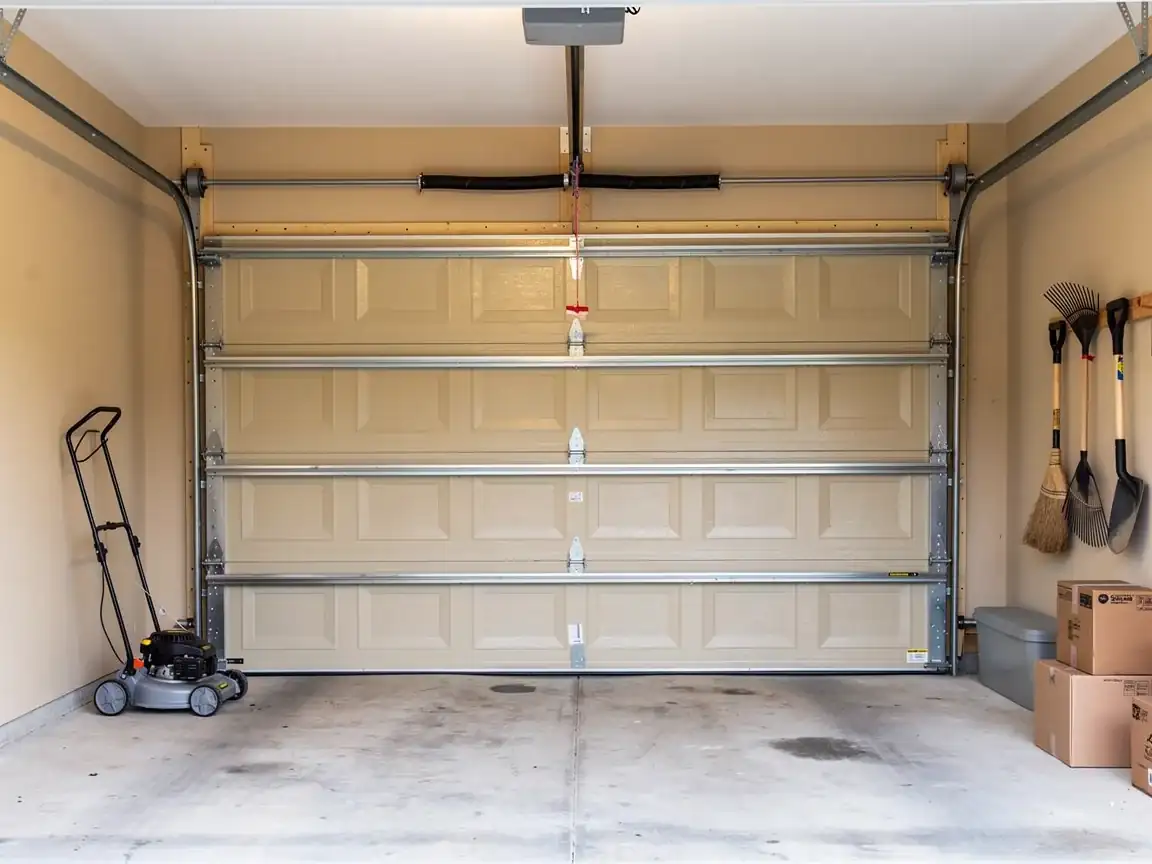
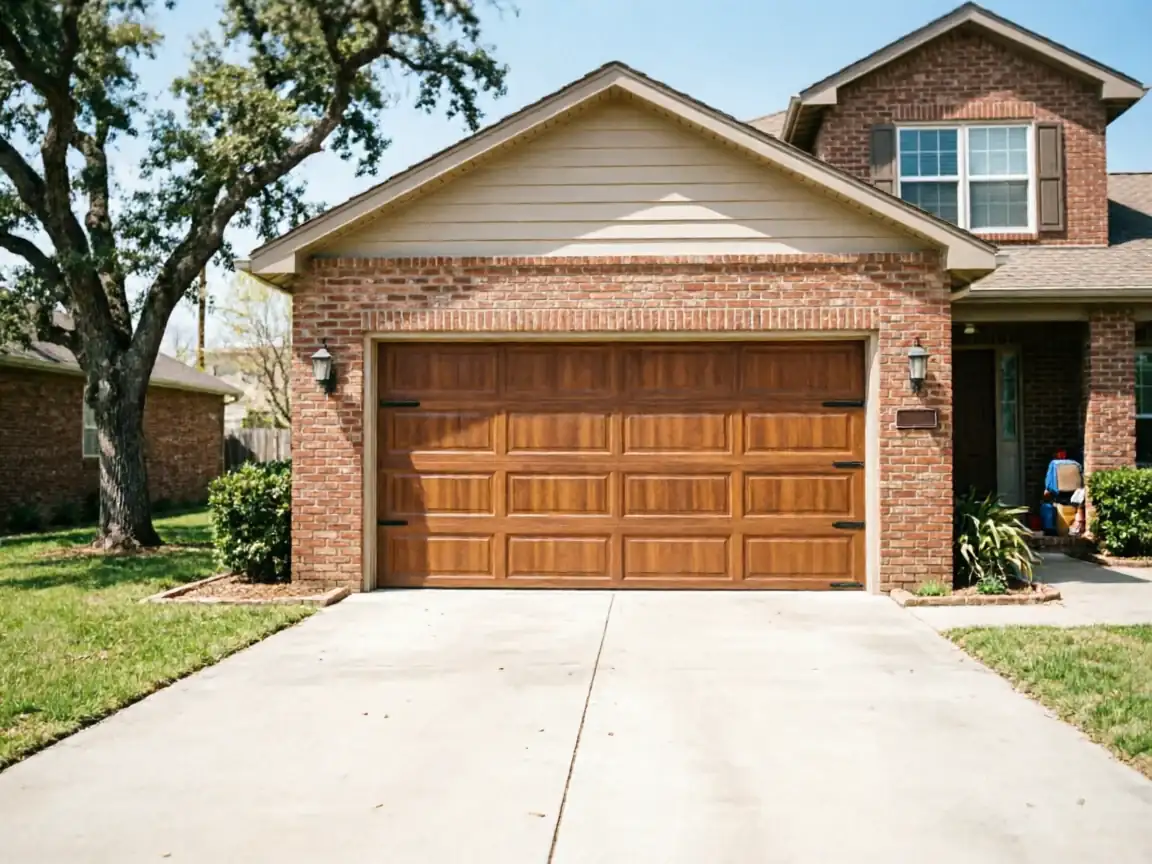
Woodway's median home was built around 1976, which puts most original garage doors squarely in the steel, non-insulated, single-layer category - usually a 16x7 double door on torsion springs rated for a heavier panel than today's lighter aluminum-faced doors. That's a narrower window than the service area overall, where housing runs from 1959 up through the mid-1990s, so we're not guessing at a 30-year spread when we load the truck for a Woodway call.
We carry torsion springs sized for that era's heavier steel panels, along with the galvanized rollers and lift cables that version of door actually used. What we don't carry on the truck are obsolete or proprietary opener boards from doors that have had three or four different openers bolted onto them over the decades - that's a special-order item, and we'll tell you straight if that's the case rather than make you wait at home on a guess. If your door's been replaced more recently with something lighter and insulated, we adjust the spring weight accordingly rather than installing by the house's age alone.
What the Repair Takes
This part of Texas sits in a moderate heat band, not an extreme one
So we're not dealing with the kind of sustained high-heat cycling that breaks down lubricant and warps panels the way it does further south or west. That matters for a 1976-era steel door: the metal itself holds up fine, but the nylon rollers and the spring's powder coating degrade on their own schedule, heat or not, and that's usually what's actually failing when a Woodway owner calls about a noisy or stuck door.
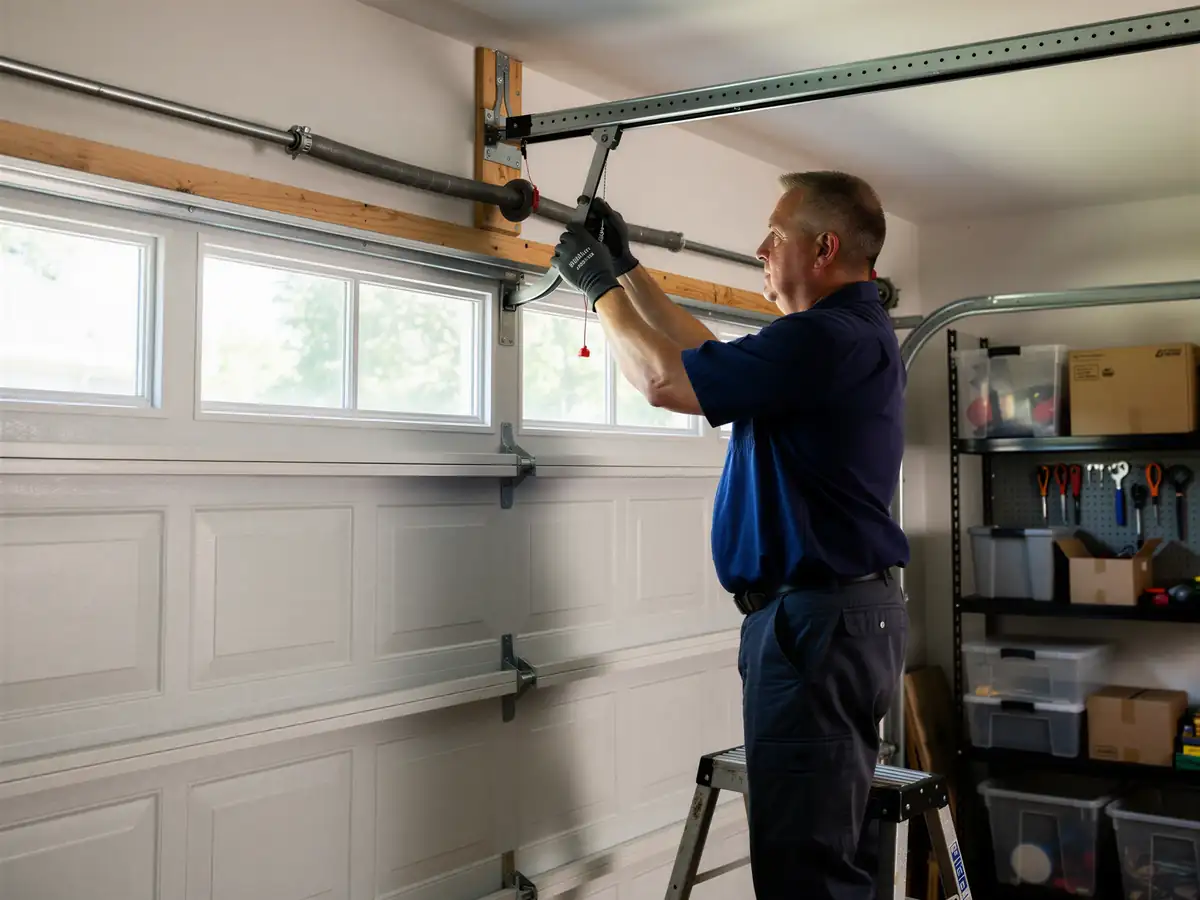
A torsion spring replacement on a double door like this is usually the bulk of the job
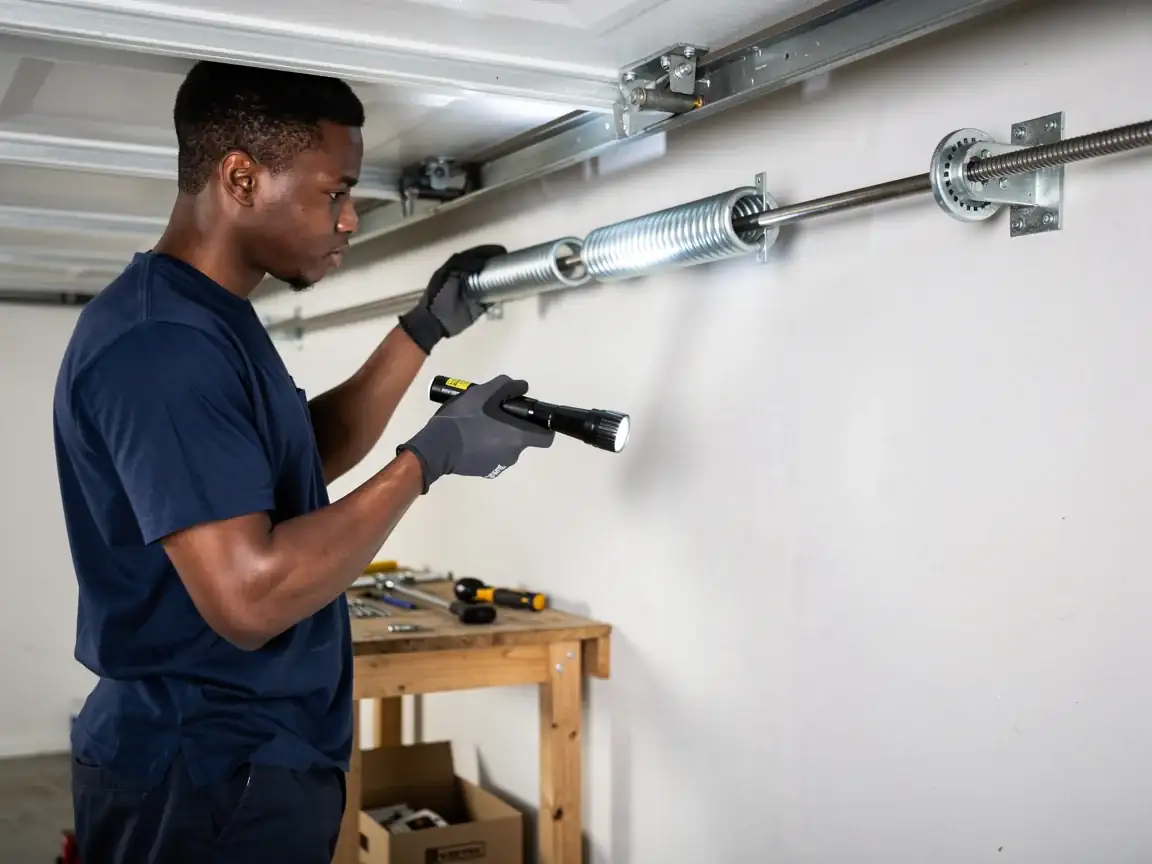
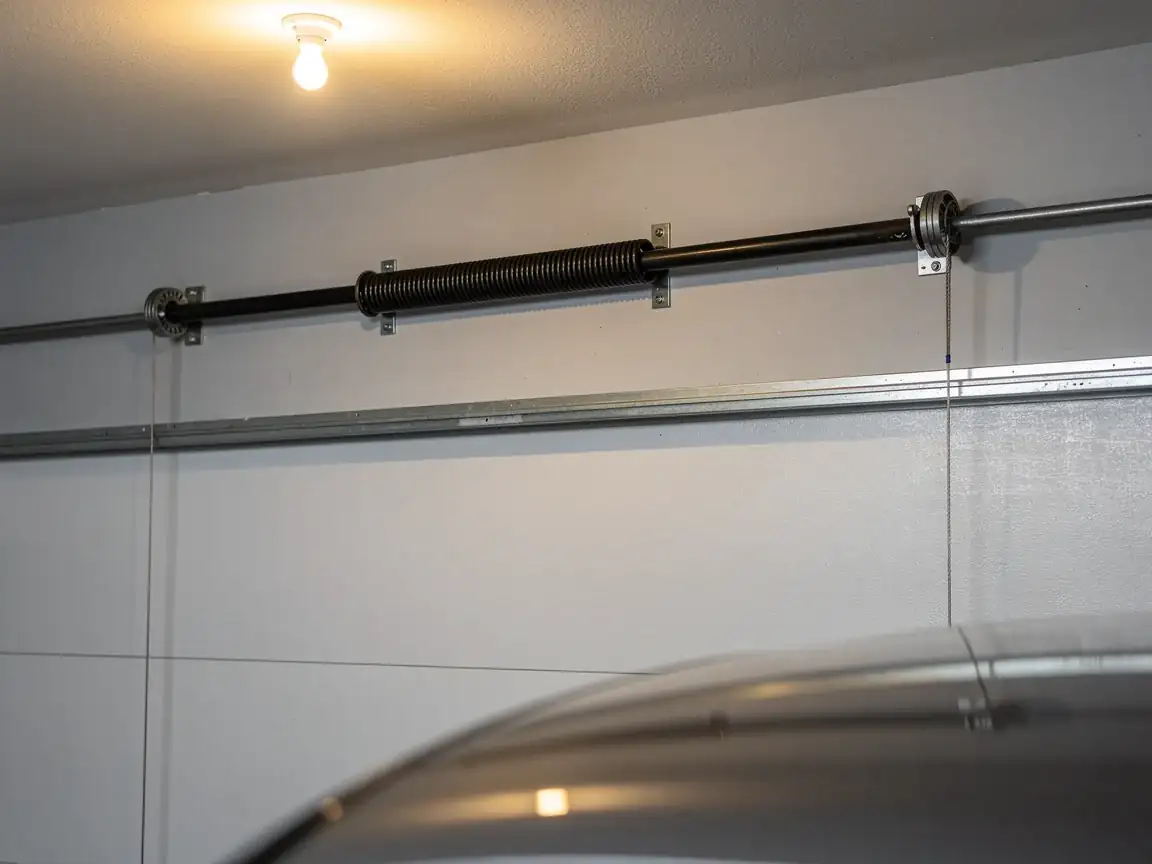
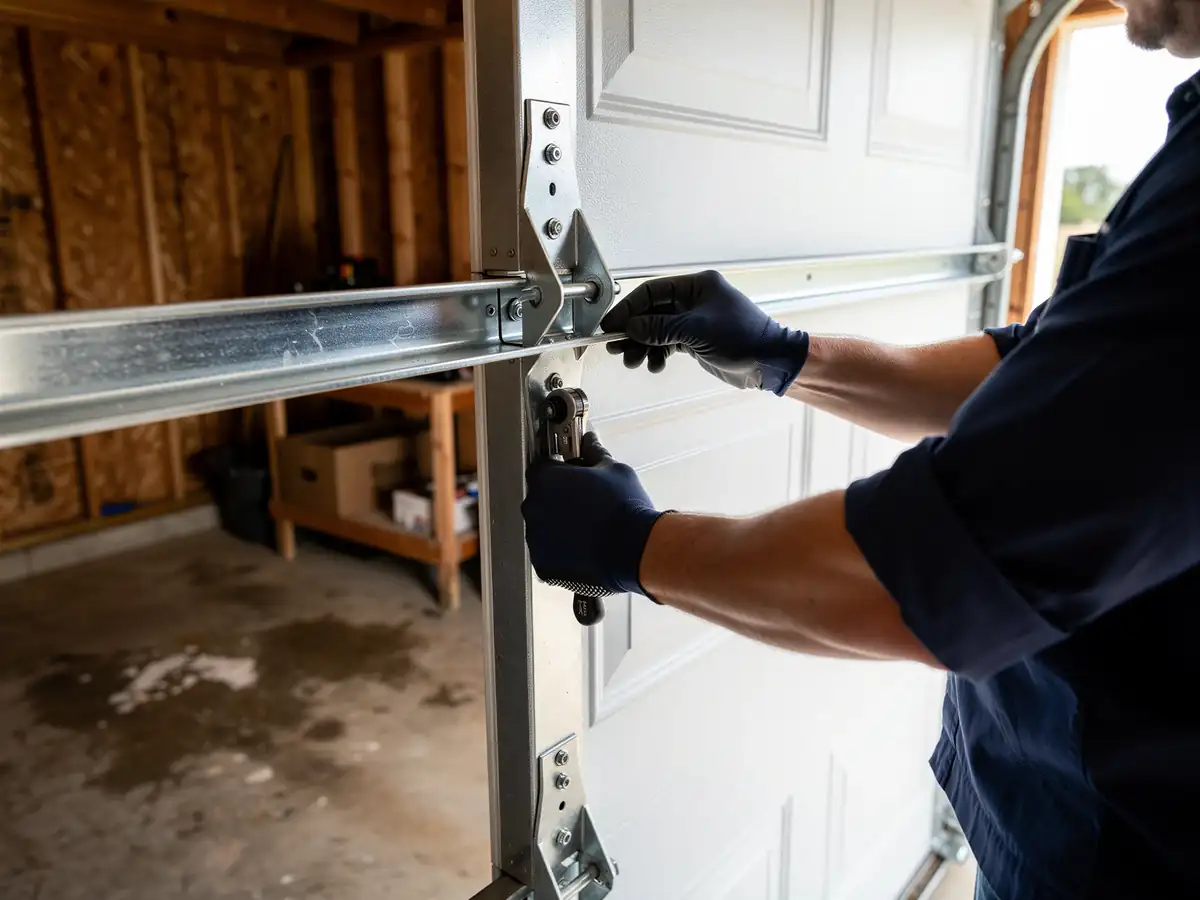
Unwinding and swapping two springs rated for the heavier panel, re-tensioning, and checking the cable drums while the door's open. If the opener is original or close to it, we'll check the drive gear too, since that's a common failure point around the same age as the springs. We don't replace a whole door over a spring or roller problem; if the panels are straight and the track's not bent, repair is the right call, not a sales pitch for a new install.
How It Shows Up
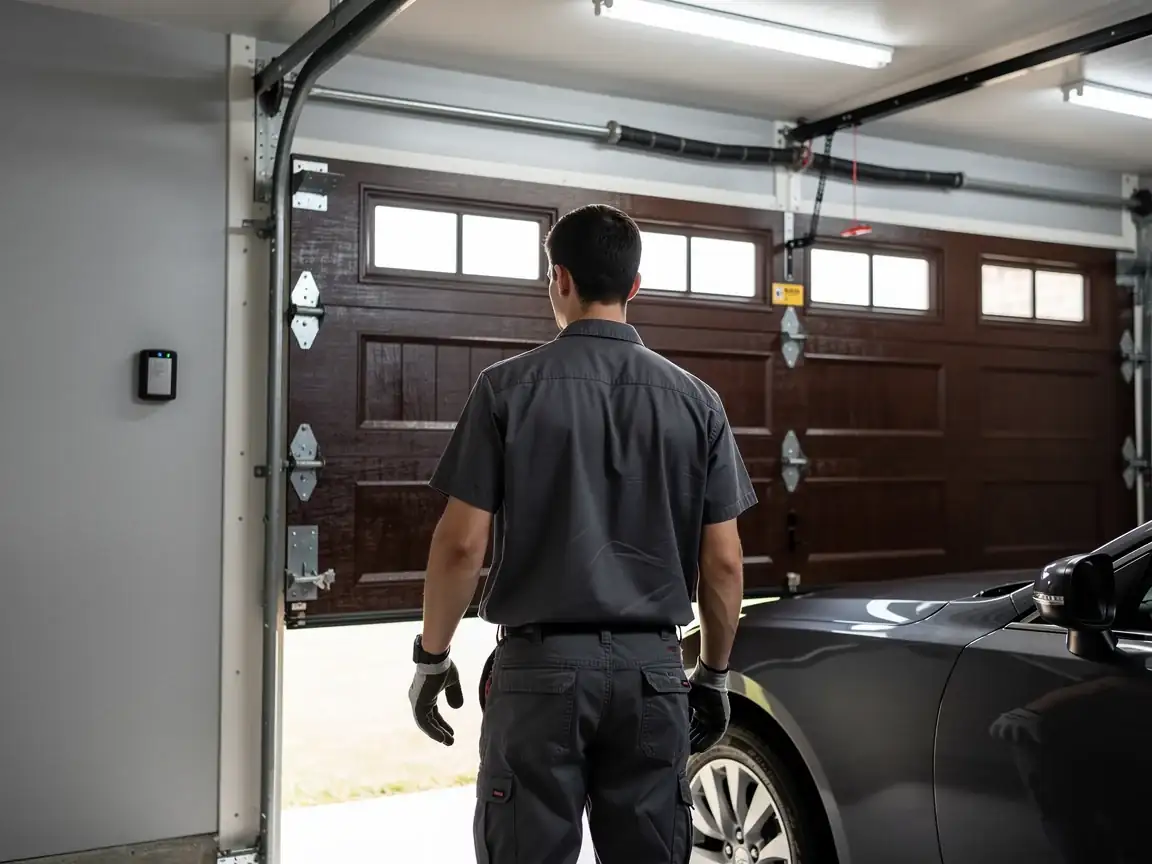
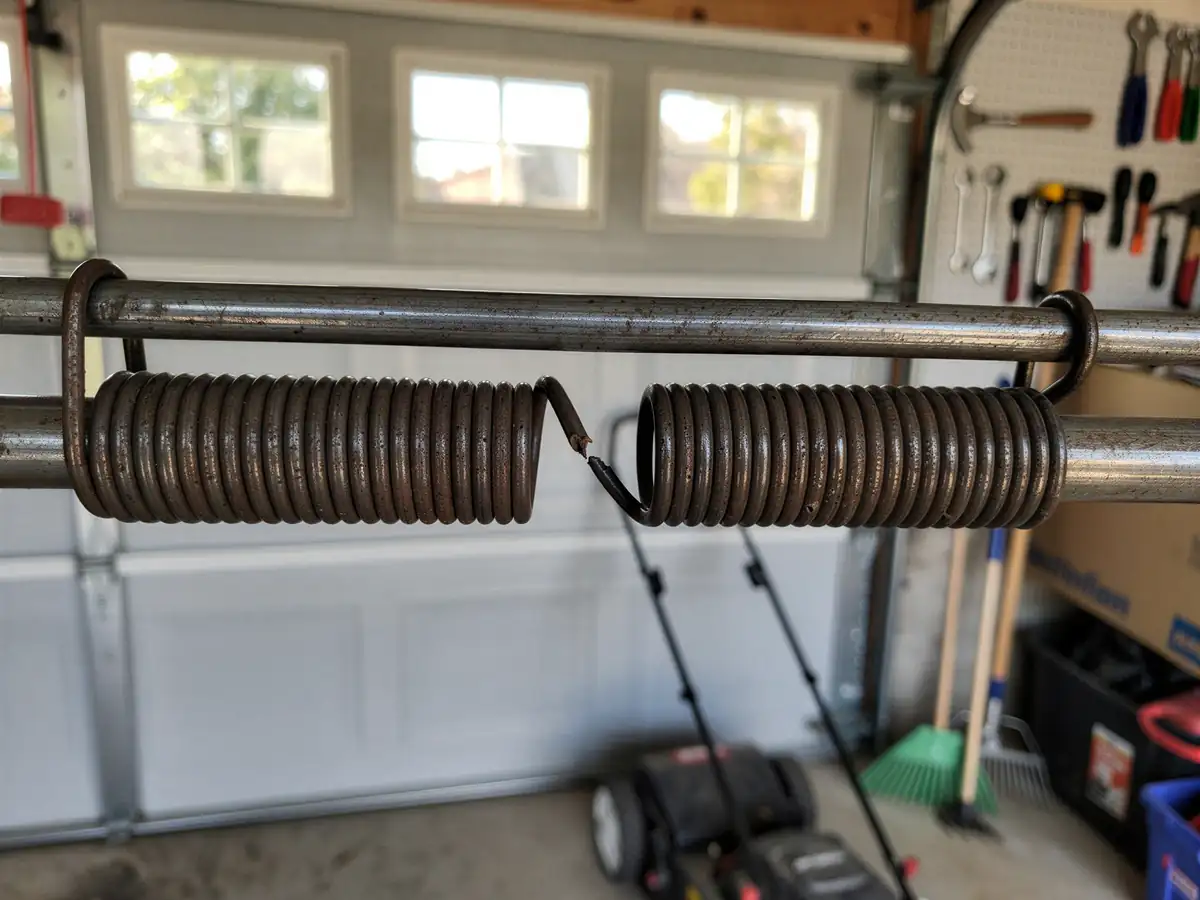
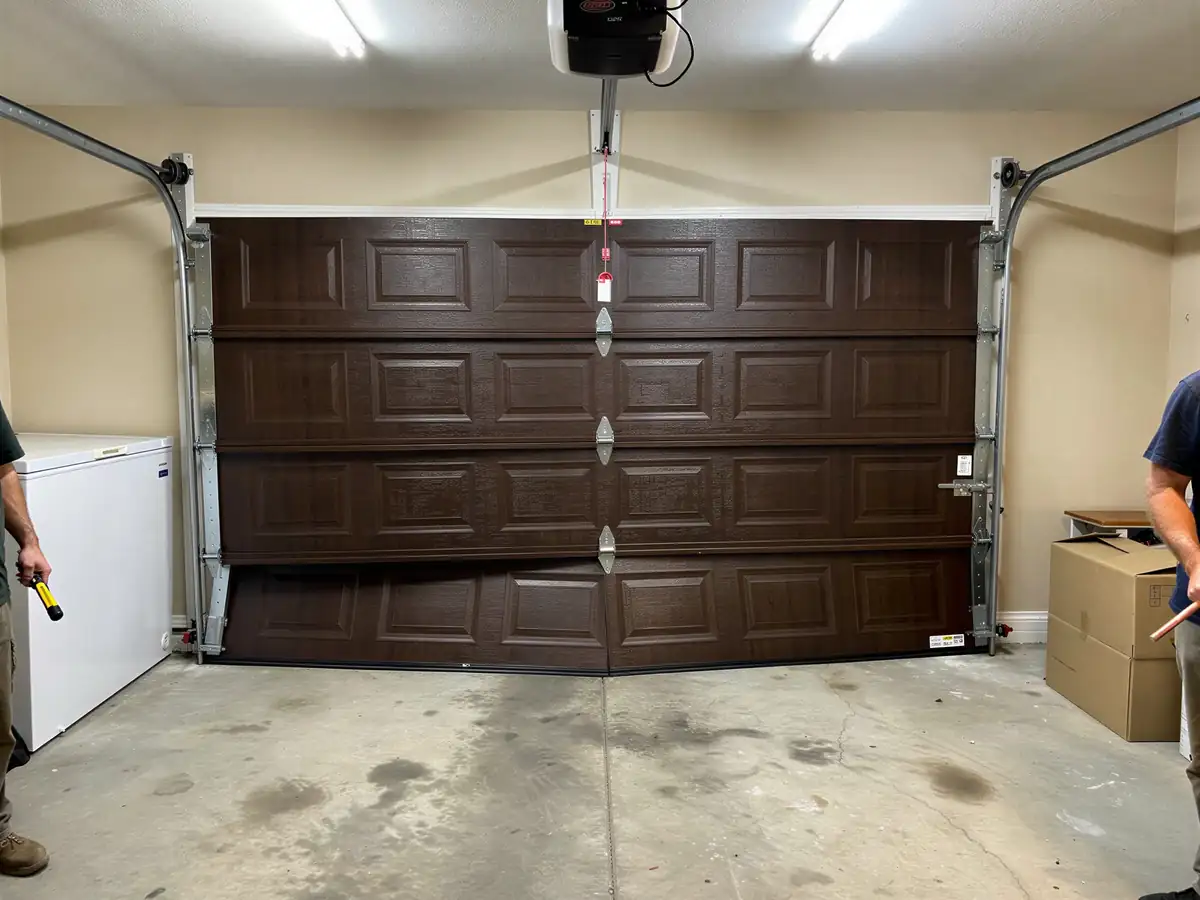
A dead torsion spring on one of these doors doesn't look subtle - the door drops hard on one side when it's partway open, or it won't budge off the floor at all because the opener isn't built to lift that much steel unassisted. On a 1976-build double door, that's almost always a spring problem, not a track or motor problem, because the spring was sized for a panel weight that's now 40-plus years into fatigue.
Woodway's household income runs well above the service area's median, which doesn't change the hardware, but it does mean we see more owners asking to swap the original steel door out for an insulated replacement at the same time as a repair call, rather than patching it again. That's a reasonable call on a door this age - we'll tell you honestly whether a spring repair buys you a few more years or whether the opener and track are also near the end, so you're deciding with real information instead of a sales push.